Proudly serving Mesa, Gilbert, Chandler, Tempe, Scottsdale, Queen Creek & surrounding areasCall or Text 24/7: 480-210-6373
Stucco homes and saguaro cacti in a suburban Mesa, AZ neighborhood under bright daylight.

Utility Trenching in Mesa, AZ for Water, Sewer, Gas & Electrical Lines

Mesa Excavation Co. provides utility trenching in Mesa, AZ, for residential, commercial, and industrial projects. We excavate water, sewer, and gas line routes for new construction and utility upgrades. Our crews also trench for electrical conduit, irrigation, and fiber optic service. Site preparation, grading, and hydro excavation help us carry the work from lot assessment through underground installation.

Mesa's decomposed granite, sandy loam, and caliche-hardened subsoil can change how a trench is excavated. Hard layers may need ripping teeth or rock saws, while existing utility crossings call for more controlled digging. We review the soil, trench depth, and nearby lines before selecting backhoes, mini excavators, or vacuum excavation equipment. A property walk lets us discuss those conditions before quoting a per-foot price.

Our crews train to OSHA 29 CFR 1926 Subpart P excavation standards, and our operators hold current certifications for the equipment they run. We coordinate Arizona 811 Blue Stake utility mark-out before digging and provide free on-site estimates.

Mesa Excavation Co. provides utility trenching in Mesa, Tempe, Chandler, Gilbert, Queen Creek, and Apache Junction.

★ ★ ★ ★ ★4.9/5 Customer Rating · 28 Years of Excavation Experience · 1,000+ Projects Completed · Licensed, Bonded & Fully Insured · Residential & Commercial Site Work

Utility Trenching Options and Benefits

What Is Utility Trenching?

Utility trenching creates narrow channels at defined depths for buried water, sewer, gas, electrical, and communications lines. The route, cover, and grade must fit the utility before slabs or pavement cover the work.

Projects range from a single irrigation line in Dobson Ranch to underground infrastructure for commercial pads in the Elliot Road Technology Corridor. Infill lots near Downtown Mesa and subdivision work off Signal Butte Road bring different access, soil, and utility coordination needs.

Where the design allows it, a joint trench combines water, power, and communications in one corridor. Consolidating excavation and backfill can reduce those costs by an estimated 10-20% compared with separate trenches, with required utility clearances built into the layout.

What Careful Trench Planning Delivers

A useful trenching plan accounts for the line being installed, the ground around it, and the surface that must be restored. Each part of the job supports the next trade and the finished property.

  • Defined routes for new services and utility upgrades
  • Equipment selected for open soil, compacted fill, or caliche
  • Public utility mark-out before mechanical excavation
  • Private line detection where older records are incomplete
  • Potholing to confirm sensitive utility crossings
  • Bedding and backfill suited to buried lines
  • Open-trench inspections coordinated before closure
  • Surface restoration considered in the initial estimate
Underground Utility Work

Utility Trenching Services

We trench for the underground lines that keep homes, commercial buildings, and development sites connected. Each utility has different cover, separation, testing, and inspection needs, so the excavation follows the approved project requirements.

Electrical Conduit Trenching

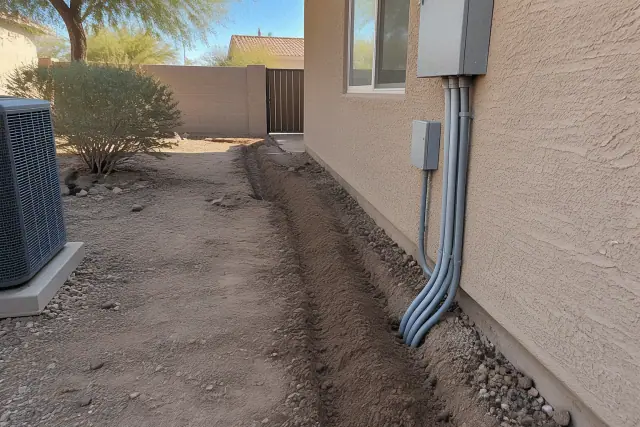
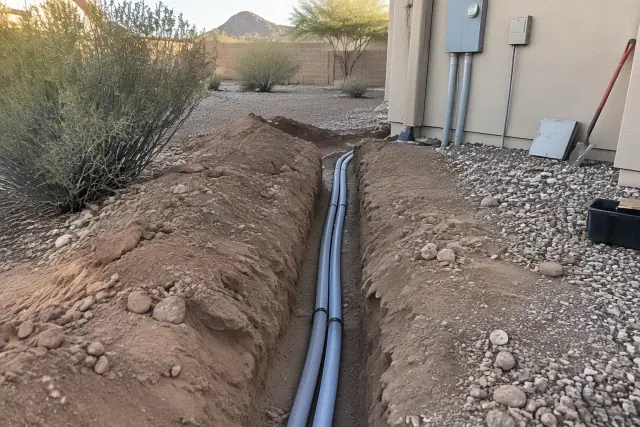
Grey PVC electrical conduit in a trench at a residential property in Mesa, AZ.

We prepare electrical routes for feeders and service upgrades, with cover checked against the circuit, conduit, and permit requirements. Underground work may use Schedule 40 or 80 PVC conduit; our installation scope includes warning tape 12 inches above conductors and open-trench inspection before backfill.

Request Estimate

Gas Line Trenching

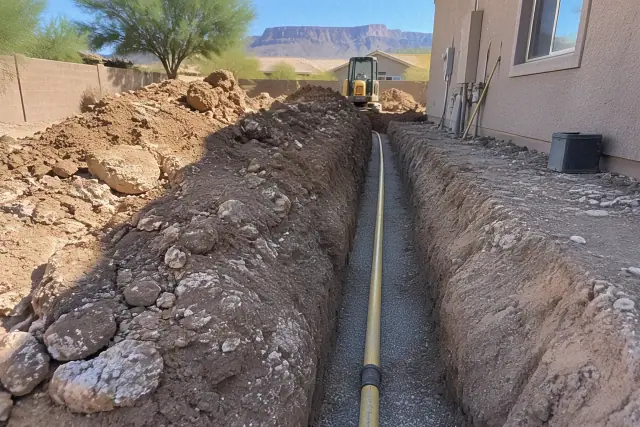
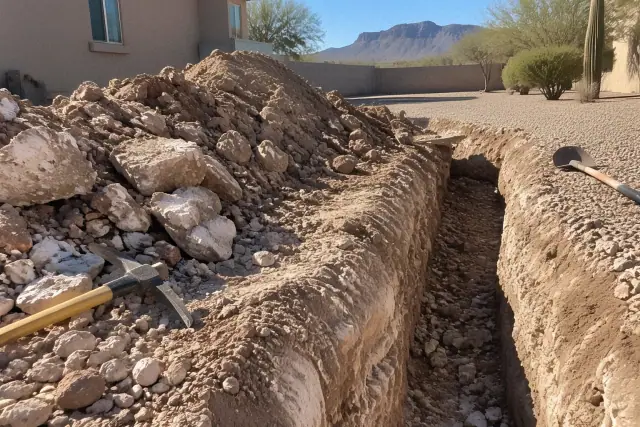
Gas line trenching in caliche-rich desert soil at a residential property in Mesa, AZ.

Gas trenching requires a defined route, clearance from neighboring utilities, and documented pressure testing before closure. We confirm the applicable cover and separation requirements during planning and keep the trench open until the required test has passed.

Request Estimate

Water Line Trenching

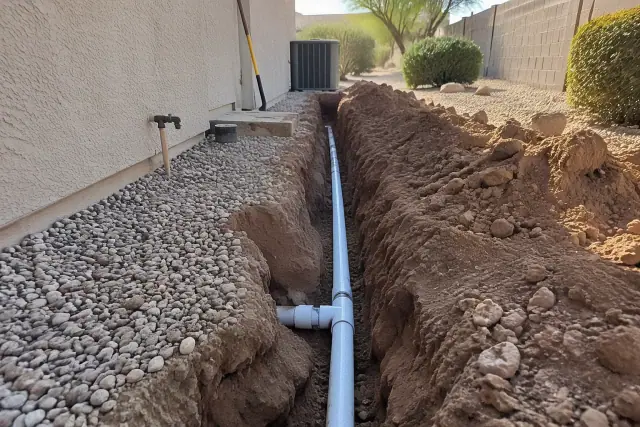
Water line trenching and exposed piping in a residential yard in Mesa, AZ.

Water supply trenches need uniform pipe support as well as the required burial depth. We use select granular bedding free of rock and debris, coordinate hydrostatic pressure testing, and compact the backfill in lifts to limit settlement beneath finished surfaces.

Request Estimate

Sewer Line Trenching

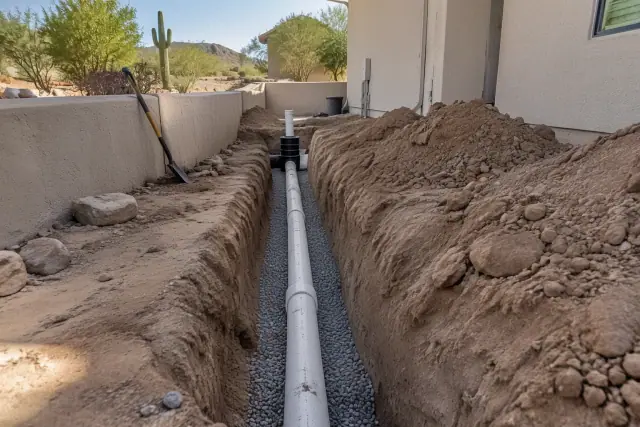
Open trench exposing a utility pipe in desert soil at a residential property in Mesa, AZ.

Gravity sewer excavation depends on a consistent fall along the route. Smaller residential lines generally use a minimum slope of 1/4 inch per foot, subject to the approved design; we use laser levels to establish grade and check sanitary-rated solvent-welded or gasketed PVC connections before covering them.

Request Estimate

Irrigation Trenching

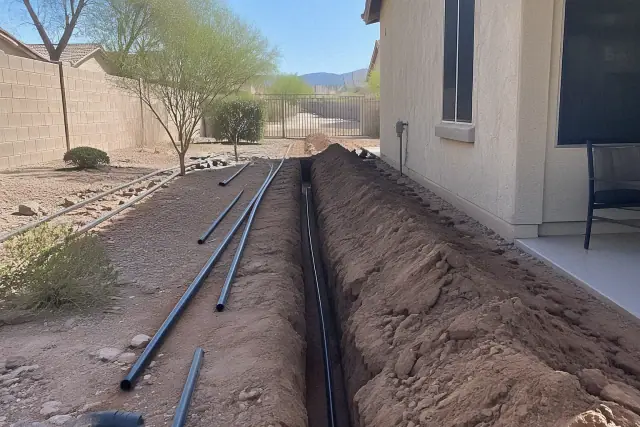
Irrigation trenching with pipes and turned earth at a residential property in Mesa, AZ.

Residential irrigation work often runs through established yards where buried private lines may not appear in public utility records. We assess the route and locate existing lines before excavation, matching the digging method to soil conditions and nearby services.

Request Estimate

Fiber Optic and Communications Trenching

Contractor photo of fiber optic utility trenching at a residential job in Mesa, AZ.

Communications trenching supports fiber expansion and new development infrastructure. We coordinate with fiber providers when existing lines cross the dig area and use hydro excavation potholing where visual confirmation is needed before mechanical digging.

Request Estimate
Match the Method to the Site

Trenching Methods and Project Options

An open residential run, a shared commercial corridor, and a congested utility crossing need different excavation approaches. We choose equipment and supporting work around soil hardness, line proximity, project layout, and the approved drainage plan.

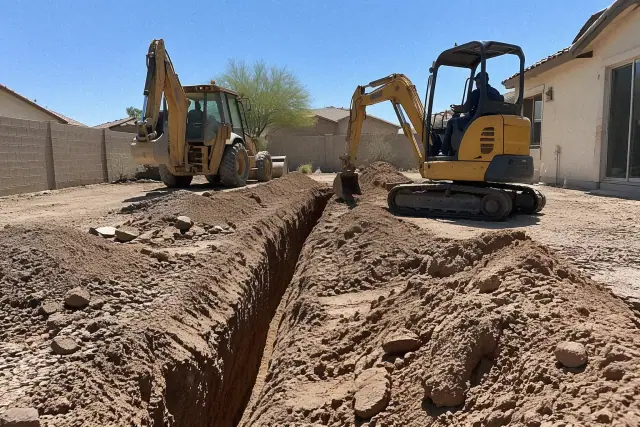
Backhoe and mini excavator trenching in a residential yard in Mesa, AZ.

Backhoe and Mini Excavator Trenching

Mechanical digging suits open trench routes away from existing utilities. Backhoes and mini excavators are selected around the required trench depth and the soil encountered on the lot.

  • Open runs for new construction
  • Single-line residential utility upgrades
  • Machine selection based on trench depth
  • Review of existing utility proximity
  • Backfill planned with the excavation
Request Estimate
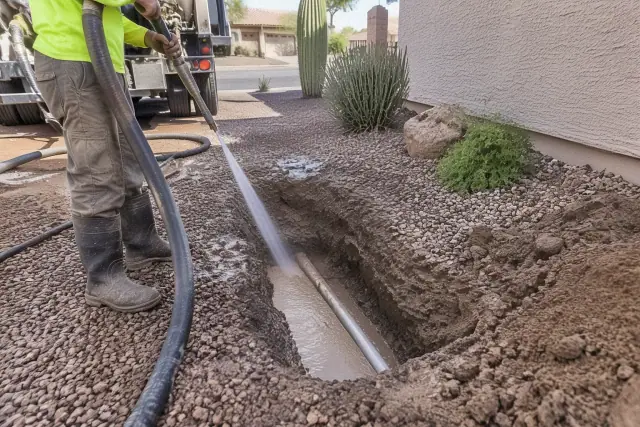
Contractor using a high-pressure wand for hydro excavation and utility trenching in Mesa, AZ.

Hydro Excavation and Potholing

Hydrovac trucks combine pressurized water with industrial vacuum equipment to expose buried utilities. We use this controlled method for daylighting and sensitive crossings where a mechanical bucket presents more risk.

  • Visual confirmation of line position and depth
  • Potholing near gas and electrical services
  • Exposure of existing fiber optic crossings
  • Work in compacted fill and caliche
  • Reduced reliance on mechanical digging near lines
Request Estimate
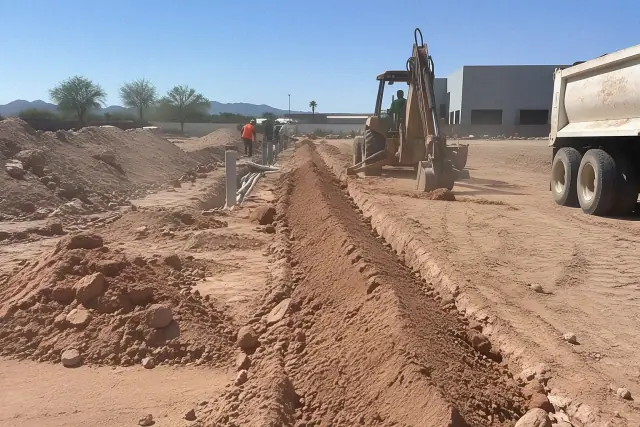
Backfilled utility conduit trench and trenching equipment at a commercial jobsite in Mesa, AZ.

Joint Trenching for Commercial Sites

Commercial pads and subdivision phases can bring several utilities into a shared corridor when the project design permits it. Coordinated layout keeps required separations and utility-owner requirements part of the excavation plan.

  • Water, power, and communications coordination
  • Shared excavation where the design allows
  • Utility clearances confirmed before digging
  • Backfill coordinated across the corridor
  • Inspection sequencing before trench closure
Request Estimate
Caliche and rock excavation for a utility trench at a residential job in Mesa, AZ.

Caliche and Rock Excavation

Caliche shelf can stop equipment chosen only for loose soil. We review the site history and ground conditions, then use ripping teeth or rock saws where hardened material requires a different approach.

  • Assessment of suspected caliche layers
  • Review of prior grading conditions
  • Equipment matched to hard subsoil
  • Rock-cutting needs considered in the quote
  • Dirt and rock hauling coordinated with excavation
Request Estimate
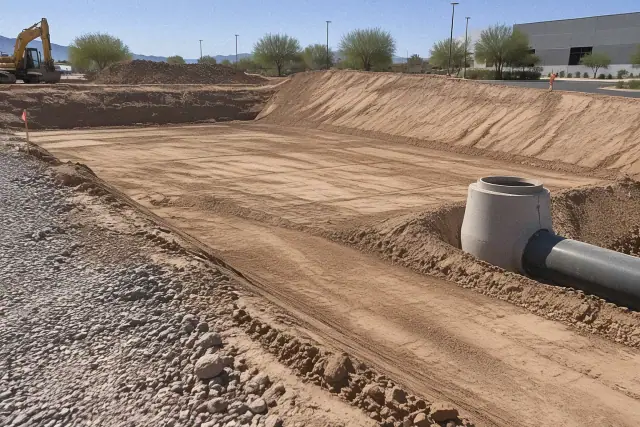
Contractor progress photo of utility trenching excavation in Mesa, AZ, showing freshly graded caliche clay dirt.

Drainage and Retention Excavation

Drainage work connects trench planning with the finished grade around a property. We excavate retention basins to drainage-report calculations and grade outlet structures to approved plans, with positive slope away from buildings.

  • Retention excavation based on drainage calculations
  • Outlet grading matched to approved plans
  • Generally a minimum 2% grade over the first several feet away from structures, subject to the site design
  • Compaction in lifts through sandy or loose fill
  • Select material where native soil will not hold slope
Request Estimate
Plan Before Breaking Ground

Choosing the Right Trenching Approach

The right method depends on what is underground as much as what is being installed. We combine a property assessment, utility information, and an on-site estimate to choose an approach suited to the actual excavation.

Equipment Matched to Mesa Soil

Local ground can shift from workable valley loam to caliche shelf. Our crews evaluate the material and select backhoes, mini excavators, ripping tools, rock saws, or hydrovac equipment to fit the trench and surrounding utilities.

Utility Locating Before Digging

Arizona 811 Blue Stake marks are the starting point for every dig. We supplement them with private line detection on older properties, electromagnetic locating, ground-penetrating radar on complex sites, and potholing where line depth or position needs confirmation.

An Estimate Based on Your Property

We walk the property before quoting a linear foot price. That review lets us account for caliche, trench depth, existing lines, and pavement restoration instead of treating every utility run as the same job.

Local Ground, Practical Planning

Why Choose Us for Utility Trenching

Mesa Excavation Co. brings trained crews, certified equipment operators, and the licensing and insurance required for our excavation work. We manage permitting and inspection scheduling within the job scope and address the ground conditions that can otherwise disrupt an underground installation.

Get a Free Estimate

Hard Caliche Layers

A trench that begins in loose soil can encounter a caliche shelf below it. That change can slow excavation and require ripping or rock-cutting equipment, so we consider likely hard layers during the site walk and discuss their effect on the work.

Undocumented Private Lines

Older properties may contain irrigation or gas lines missing from available records. Private detection and selective potholing help confirm what is in the route before a machine digs near an uncertain crossing.

Crowded Utility Corridors

Gas, fiber, and electrical lines can make a narrow excavation route more demanding. A struck line can bring repairs, fines, and delays reaching tens of thousands of dollars; provider coordination and controlled exposure help reduce that risk.

Backfill Settlement

Poor pipe support or loosely placed fill can settle beneath pavement and slabs. Select granular bedding and compaction in lifts help support the line and reduce the chance that restored surfaces crack above it.

Monsoon Runoff and Erosion

Short, intense storms can erode sandy or loose fill around excavation work. During Mesa's July-through-September monsoon runoff events, drainage grading, retention excavation, and suitable compacted material become especially important to the finished site.

Inspection Delays Before Backfill

Covering a utility before required testing or inspection can interrupt the job. We coordinate open-trench checks, gas and water pressure testing, and any required follow-up sewer inspection so closure happens in the proper sequence.

From Site Walk to Restoration

Our Utility Trenching Process

The job starts with the property and ends with a supported, backfilled route ready for its intended surface. We coordinate excavation, utility checks, permits, and inspections around the same plan.

01.

Walk the Site and Define the Route

We review the requested utility run, soil composition, and grading history. Suspected caliche, rock, existing surfaces, and the required trench depth help shape the scope and free on-site estimate.

02.

Locate and Confirm Existing Utilities

We arrange Arizona 811 Blue Stake mark-out and review private line information. Electromagnetic locating, ground-penetrating radar on complex sites, or hydro excavation potholing adds detail where flags alone do not resolve the crossing.

03.

Coordinate Permits and Clearances

We manage permit applications for permitted work and confirm the required depth, separation, backfill, and right-of-way restoration details. Utility owners and fiber providers are involved where their infrastructure passes through the excavation area.

04.

Excavate to the Planned Grade

We select mechanical or hydro excavation for the conditions and maintain the required route and grade. Where workers enter, trenches 5 feet deep or greater generally require cave-in protection unless entirely in stable rock; shallower trenches also need protection when a competent person identifies a cave-in hazard.

05.

Complete Testing and Open-Trench Checks

The utility determines the checks before closure: electrical inspection, documented gas pressure testing, hydrostatic water testing, or sewer grade and connection inspection. We schedule the required inspections and keep the trench open until the applicable checks are complete.

06.

Backfill and Restore the Surface

We place appropriate bedding and backfill, compact material in lifts, and complete the planned surface restoration. Where a sewer installation requires a further inspection after backfill, we coordinate that visit as part of the job.

Plan Your Underground Work

Request a Free Trenching Estimate

Tell us which utility you are adding or upgrading and where the route crosses your property. We will walk the site, review soil and existing-line conditions, and discuss excavation and restoration costs before quoting the work.

Utility Trenching Help

Utility Trenching FAQs

Find answers about trench depth, excavation costs, permits, locating, and the conditions that affect underground work in Mesa.

Discuss Your Trenching Project

Depth depends on the utility, installation method, surface loading, and approved plans. Electrical and gas runs often involve 18 to 24 inches of cover, while domestic water lines may call for about 18 inches; these figures do not replace the project-specific requirements. Sewer depth follows the required grade and connection elevations. We confirm the exact cover and separation against the adopted code, utility standards, and permit before digging.

Standard utility trenching in open soil around the Phoenix metro area generally runs $10 to $25 per linear foot, with shallow runs in easy dirt sometimes as low as $5 to $9 per foot. Caliche shelf can push the trenching cost two to three times higher because ripping and rock-cutting equipment may be needed. Asphalt or concrete restoration adds $12 to $30 per linear foot on top of the base trenching cost. Our free on-site estimate accounts for the actual route and conditions.

Most utility work connected to new construction, service upgrades, or the public right-of-way requires a City of Mesa permit. Simple landscape or irrigation trenching on private property away from easements may have different requirements, which should be confirmed before digging. We handle permit applications and inspection scheduling within our scope on permitted jobs.

Mesa draws on Salt and Verde River supplies through Salt River Project, Colorado River water through the Central Arizona Project, and local groundwater, alongside reclaimed water use. Regional supply pressures make dependable water and sewer infrastructure especially valuable. Correct line support, required testing, and careful backfill help avoid leaks or settlement as development and utility upgrades proceed.

The Elliot Road Technology Corridor and nearby Eastmark development include data center, advanced manufacturing, and residential projects. Those project types need underground electrical feeders, fiber optic routes, water and sewer connections, and drainage work. The trenching scope depends on the approved infrastructure plan for the particular site.

Work hours must fit the applicable City of Mesa noise rules and project permit conditions. We coordinate residential start times with neighbors and plan excavation within the allowed work window. Any afterhours work would need the applicable city approval before scheduling.

We begin with Arizona 811 Blue Stake public utility mark-out, then review older or undocumented private lines. Electromagnetic locating and, on complex sites, ground-penetrating radar help identify the route. Hydro excavation potholing provides visual confirmation of depth and position before mechanical digging near known utilities.

Backhoes and mini excavators are usually faster and more economical for open runs away from existing services. Hydro excavation typically costs more per hour but offers more controlled exposure near gas, fiber, or electrical lines. We compare the utility density and soil conditions before recommending the method.

The American Public Works Association color code uses red for electric, yellow for gas and oil, orange for communications, blue for water, and green for sewer. Pink identifies temporary survey markings. Our crews review the marks before excavation and confirm sensitive crossings rather than assuming a flag establishes the exact buried depth.

A joint trench may carry water, power, and communications where the approved layout and utility requirements allow it. Required separation and provider clearances still govern the corridor. We coordinate those details for commercial pads and subdivision phases before excavation begins.

Our crews stop work immediately and secure the site. They contact the utility owner and emergency services before any further excavation. Locating, provider coordination, and potholing are used beforehand to reduce the chance of a strike.

Our related work includes site preparation and grading, land clearing, foundation excavation and building pads, pool excavation, and pool demolition and removal. We also handle concrete demolition and removal, drainage and retention excavation, dirt and rock hauling, and hydro excavation. The site review identifies which of those services belong in your project scope.

Mesa Excavation Co. provides utility trenching throughout Mesa, Tempe, Chandler, Gilbert, Queen Creek, and Apache Junction. In Mesa, we work on projects in areas such as Dobson Ranch, Downtown Mesa, and the Elliot Road Technology Corridor. We review the property and utility route before defining the excavation scope.