Proudly serving Mesa, Gilbert, Chandler, Tempe, Scottsdale, Queen Creek & surrounding areasCall or Text 24/7: 480-210-6373
Stucco homes and saguaro cacti in a suburban Mesa, AZ neighborhood under bright daylight.

Mesa Excavation Co.: Site Preparation & Grading in Paradise Valley, AZ

Mesa Excavation Co. provides site preparation and grading for homes, estate properties, and commercial projects in Paradise Valley, AZ. We clear land, excavate foundations and building pads, and trench for underground utilities. Our earthwork services also include pool excavation, demolition, drainage excavation, and dirt and rock hauling. We start with the lot conditions and your construction plans to define the work.

Caliche, exposed bedrock, and sloping lots can make excavation difficult below Camelback Mountain and Mummy Mountain. Drainage routes and cut-and-fill limits also shape how much ground can be disturbed. We assess the soil, elevations, and equipment access before quoting the job. That site walk helps you understand the work needed before foundation or pool construction begins.

Our coverage spans Paradise Valley's 15.7 square miles, including properties near Camelback Country Club and Mummy Mountain Park. Bring your civil plans and project scope to the site assessment so we can discuss grading, excavation, and haul-off together.

★ ★ ★ ★ ★4.9/5 Customer Rating - 28 Years of Excavation Experience - 1,000+ Projects Completed - Licensed, Bonded & Fully Insured - Residential & Commercial Site Work
Excavation Services

Excavation Services in Paradise Valley, AZ

From clearing an estate lot to excavating a pool or utility trench, the right scope depends on the ground and the planned build. Owners coordinating projects in Paradise Valley and Gilbert, AZ should assess each property's soil, access, and drainage separately. The services below cover the earthwork tasks we handle for residential and commercial sites.

Site Preparation & Grading

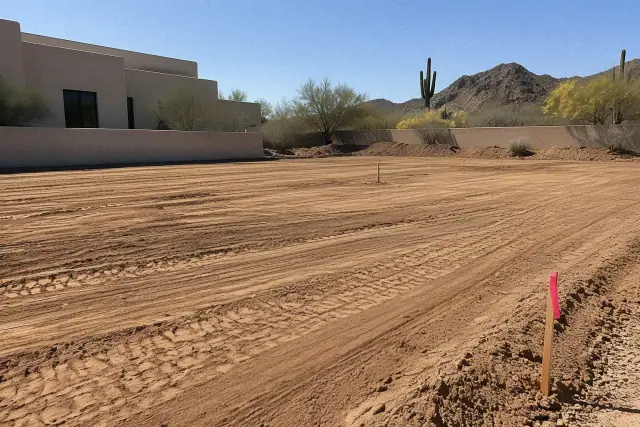
Laser level stakes and tire tracks on graded earth for excavation in Paradise Valley, AZ.

We clear and shape lots through rough grading, compaction testing, and fine grading to the elevations on your plans. Hillside sites need particular attention to cut-and-fill balance before a foundation crew can begin.

Explore Service

Land Clearing

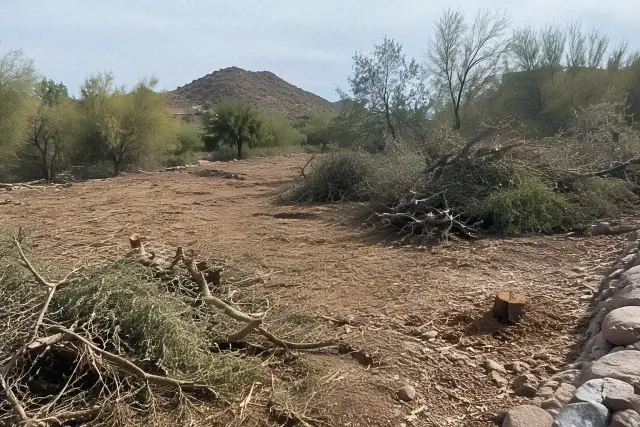
Contractor progress photo of land clearing showing raw soil, cleared brush stumps, and chipped organic debris in Paradise

Native saguaro, palo verde, and creosote can complicate clearing near preserve land. We coordinate protected plant relocation with your landscape architect, grub roots, and strip topsoil within the approved disturbance limits.

Explore Service

Utility Trenching

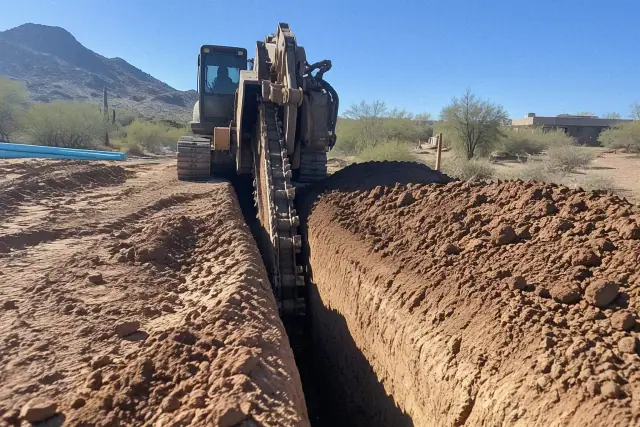
Contractor photo of utility trenching in raw desert earth in Paradise Valley, AZ.

We excavate trenches for water, sewer, gas, electrical, and irrigation lines to the specified route, depth, and bedding requirements. Our scope also includes septic excavation where called for on properties using well and septic systems.

Explore Service

Foundation Excavation & Building Pads

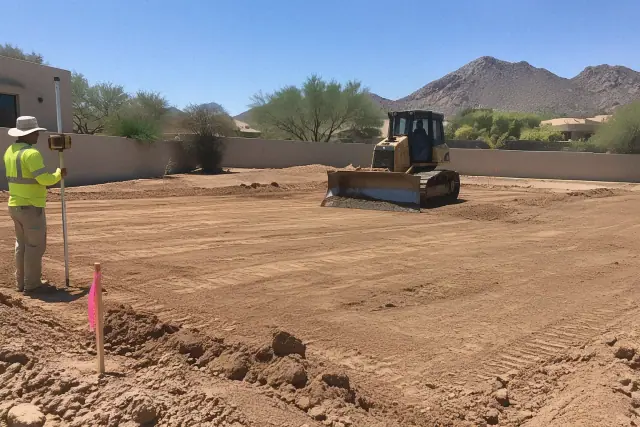
Bulldozer leveling a compacted earthen pad for a new foundation in Paradise Valley, AZ.

We excavate to the geotechnical engineer's specified depth and over-excavate and recompact where the soil report requires it. Engineered fill is placed in lifts, with laser level checks to verify the planned pad elevation.

Pool Excavation

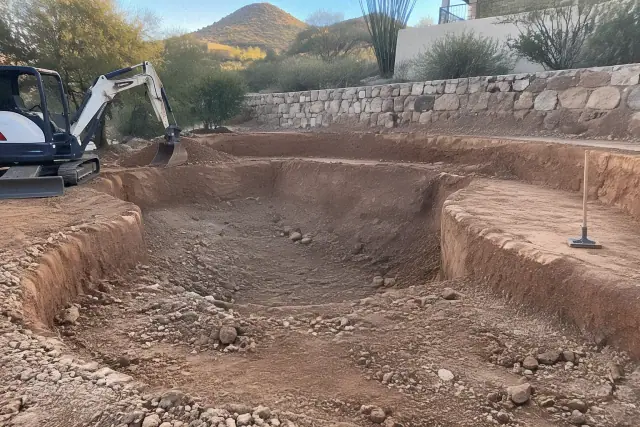
Compact excavator digging deep and shallow zones for a backyard pool in Paradise Valley, AZ.

Pool excavation follows your pool builder's shape, depth, and shell specifications. We remove spoil and coordinate plumbing and electrical conduit trenching with the pool contractor before gunite work.

Pool Demolition & Removal

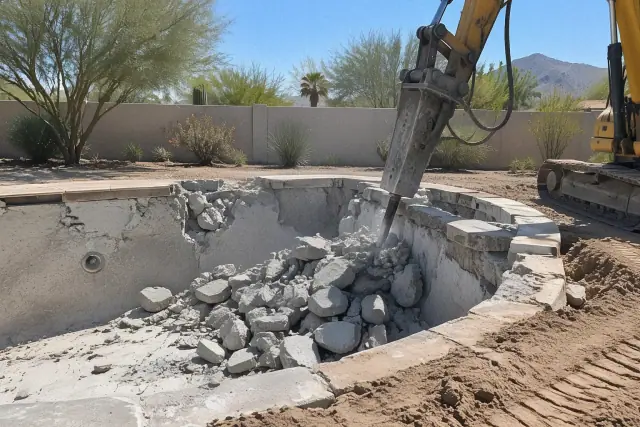
Hydraulic breaker demolishing an inground pool in a Paradise Valley, AZ backyard.

Removing an older gunite pool can be part of a larger backyard project near Lincoln Drive or elsewhere in town. We review the pool removal scope and the planned use of the yard during the site walk so the earthwork quote reflects the project.

Concrete Demolition & Removal

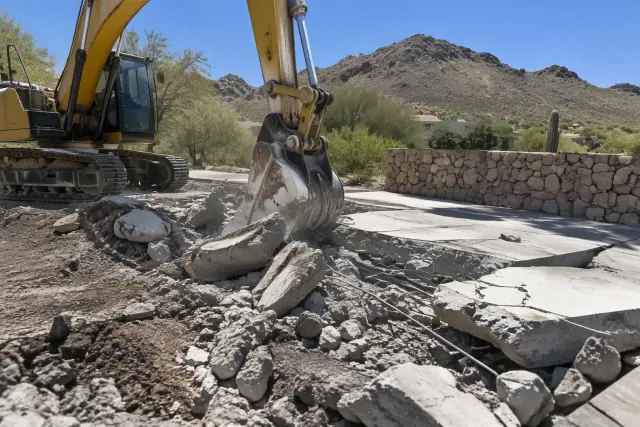
Heavy machinery breaking apart a thick concrete driveway during excavation in Paradise Valley, AZ.

We break out patios, driveways, and pool decks with hydraulic hammers and saw-cut edges where new concrete will tie in. Debris is hauled off site, with concrete recycling used where possible.

Drainage & Retention Excavation

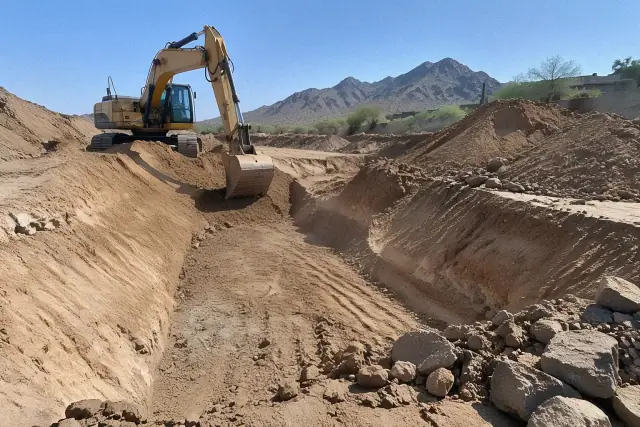
Tracked excavator digging a sloped trench for a stormwater detention system in Paradise Valley, AZ.

We excavate retention basins, swales, and area drains sized to the civil engineer's calculations. Grading follows the drainage plan to direct runoff away from structures and toward the designed collection areas.

Dirt & Rock Hauling

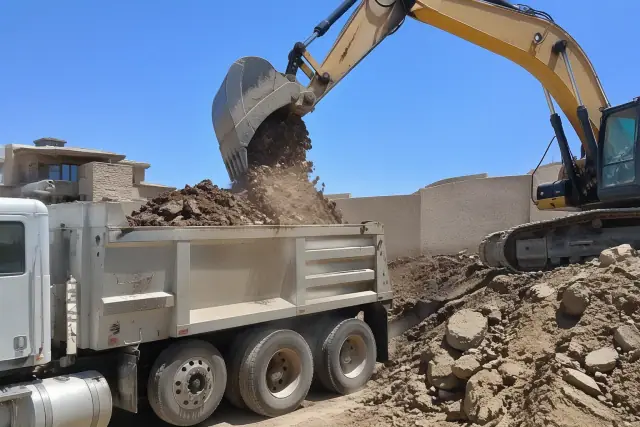
Excavator loading stone and earth into a haul truck in Paradise Valley, AZ.

We export excess dirt and rock to approved disposal sites and bring in clean fill or topsoil when needed. Material volume, haul distance, and the lot's cut-and-fill balance help determine the hauling scope.

Hydro Excavation

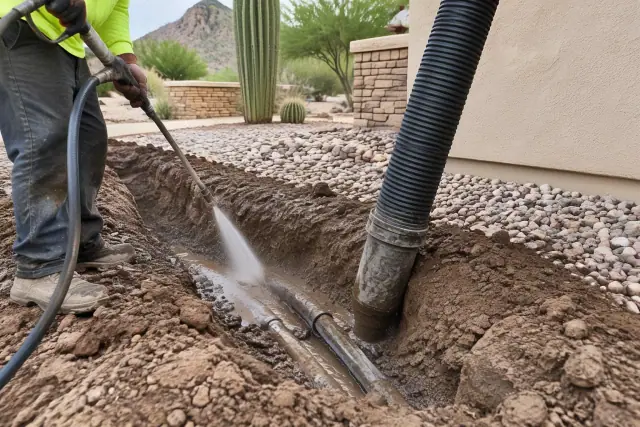
Hydro excavation showing exposed underground utility lines near a stucco wall in Paradise Valley, AZ.

Hydro excavation is part of our excavation service range in Paradise Valley. Discuss the intended excavation area and project requirements during the site assessment so we can review where this service fits your scope.

Plan the Work

Choose an Excavation Scope That Fits Your Lot

A new hillside home, a backyard pool, and a utility extension call for different excavation work. Use the plans, soil report, and future use of the property to identify which tasks need to happen together.

Start with the Soil Report

Decomposed granite can give way to solid caliche within a few feet. Foundation excavation should follow the geotechnical report's depths and any instructions for over-excavation and recompaction.

Match Grading to the Slope

A level building pad on a hillside may need terracing or engineered retaining structures. Review the proposed pad elevation and cut-and-fill limits before choosing the grading scope.

Plan the Drainage Route

Wash-adjacent lots need more than a flat work area. Coordinate retention basins, swales, and area drains with the civil plan so the finished grade directs runoff to the intended locations.

Locate Existing Utilities

Older properties may lack accurate as-built utility maps. Discuss existing lines and the planned trench routes before excavation, particularly when a remodel adds plumbing, electrical, or irrigation connections.

Allow for Equipment Access

A home addition or ADU can leave less room to excavate than an open custom-home lot. Review the footprint, setbacks, and staging space when planning equipment access and soil removal.

Include Import and Haul-Off

Some lots cannot retain all the spoil produced by a pool or foundation excavation. Include export material, any needed clean fill, and the haul distance in the scope before comparing quotes.

Local Site Challenges

Ground Conditions That Complicate Excavation

Rock, runoff, buried materials, and restricted working space can change how a Paradise Valley job is staged. Identifying these conditions during the site assessment gives the excavation plan a useful starting point.

Request a Site Assessment

Caliche and Exposed Bedrock

Caliche layers can run several feet thick and may require ripping with heavy equipment instead of standard digging. This affects the excavation approach, spoil handling, and schedule for foundations and pools.

Monsoon Runoff Near Washes

Hardpan soil absorbs water poorly, allowing runoff to move quickly. Lots near washes draining toward Indian Bend Wash need careful review of drainage routes and the civil plan's retention provisions.

Steep Slopes and Limited Disturbance

Hillside excavation must account for cut heights, retaining structures, and the area that may be disturbed. Equipment staging and grading plans need to fit those constraints before earthwork starts.

Buried Debris Under Older Slabs

Demolition on an older property can reveal unreinforced slabs or debris from previous additions. We account for these possibilities when reviewing concrete removal and the material that must leave the site.

Uncertain Underground Line Locations

An incomplete utility record can leave trench routes in conflict with existing lines. Review the known connections and planned locations early, especially when work extends an older home's utilities.

Settling and Incorrect Pad Elevations

Loose fill or an incorrectly graded pad can create problems for the next construction phase. Layered compaction, testing, and elevation checks help establish the subgrade specified for the build.

Why Choose Mesa Excavation Co.

An Excavation Plan Built Around Paradise Valley, AZ

Paradise Valley had roughly 12,658 residents in the 2020 census, yet its estate lots, resort properties, and hillside sites create varied earthwork demands. Our approach connects the soil assessment, civil plans, and trade schedule so those property differences are addressed before excavation.

Familiarity with Local Site Review

We coordinate grading and drainage work with the Town of Paradise Valley Community Development Department. Preserve boundaries, HOA documentation, and street weight restrictions are part of the local planning considerations described in our process.

Quotes After a Site Walk

Soil composition and rock exposure can change from one lot to the next. We quote after an on-site assessment so the scope accounts for the ground conditions and planned earthwork.

Coordination with the Next Trade

Foundation crews need an accurate, compacted pad, while pool contractors need excavation aligned with plumbing rough-in and steel. We coordinate the earthwork sequence with those construction tasks.

Our Site Preparation Process

From Site Assessment to Final Grading

Our process connects the initial soil and drainage review with clearing, excavation, compaction, and hauling. The sequence is adjusted to your lot and the foundation, pool, or utility work shown on the plans.

01.

Walk the Site and Assess the Ground

We review caliche depth, visible rock, drainage patterns, and the proposed work area. This assessment helps define the excavation scope before a quote is prepared.

02.

Coordinate Plans and Permits

We coordinate the grading and drainage plans with the Town of Paradise Valley review process. Required inspections and project documentation are addressed before the related construction stages.

03.

Protect Plants and Clear the Lot

Mobilization includes erosion control and fencing around protected plants. Clearing, root grubbing, and topsoil stripping then follow the approved disturbance limits.

04.

Rough-Grade and Excavate

We rough-grade to the subgrade elevations on the civil plans, then excavate foundations, pools, or utility trenches to the engineered specifications. Hillside work is staged around slope and access constraints.

05.

Compact and Verify Elevations

Engineered fill is compacted in lifts, with testing and elevation checks tied to the project specifications. Fine grading brings the pad to the final elevation shown on the plans.

06.

Balance Material and Complete Hauling

We assess what material can stay under the cut-and-fill plan and haul away excess dirt and rock. Clean fill or topsoil is brought in when the lot needs imported material.

Project Outcomes

Earthwork Goals for Homes, Pools, and Additions

Case Study 1: Custom home pads: A compacted pad at the planned elevation gives the foundation crew the prepared starting point it needs. On a hillside lot, grading also has to fit the engineered slope and drainage design.

Case Study 2: Backyard pools: Excavation to the pool builder's specifications establishes the shape and depth for the shell. Coordinated trenching and spoil removal prepare the work area for the plumbing and steel stages.

Case Study 3: Home additions and ADUs: Precise foundation excavation and planned utility trenches help fit the new work into a constrained footprint. Existing structures, access, and setbacks shape the excavation approach.

Discuss Your Project

Request Your Excavation Estimate

Planning a custom build off Tatum Boulevard, a pool project near Lincoln Drive, or drainage work on a hillside lot? Share your plans and the work you need completed. We can review site conditions, excavation requirements, and hauling during an on-site assessment.

Excavation Questions

Site Preparation & Grading FAQs for Paradise Valley, AZ

These answers explain scope, soil conditions, costs, and construction sequencing from our site preparation process. Lot-specific plans and an on-site assessment determine the work your project needs.

Call Our Experts

It can, particularly when a Paradise Valley lot needs substantial rock removal, hillside grading, retaining wall engineering, or drainage design. The difference comes from the actual site conditions and project requirements. We assess the lot before quoting instead of applying one flat rate across communities.

A remodel that adds a foundation extension or new underground utility lines can require excavation beyond the interior work. The foundation footprint and utility routes help define that scope. Check the proposed changes with the Town of Paradise Valley Community Development Department at 6401 E Lincoln Drive to confirm the review and permits your project needs.

Site preparation includes clearing vegetation and roots, rough and fine grading, compacting subgrade, excavating foundations and utilities, and managing imported or excess material. Drainage shaping and erosion control can also be part of the work. In Paradise Valley, the scope must account for the lot's slope, cut-and-fill plan, and protected vegetation.

Confirm the wall's design, engineering, permit, and inspection requirements with the town before construction. A wall built without required approval may face a stop-work order or need modification or removal. If it supports a building pad or graded slope, coordinate it with the civil and structural plans.

The broader Phoenix metro range for standard residential site preparation is $1,300 to $5,600, with an average around $3,800. Paradise Valley hillside lots can cost more, and extensive grading on sloped or rocky terrain can reach $15,000 or more per acre once haul-off and compaction testing are included. We provide a firm quote after assessing the site's soils and scope.

Most single-family foundation excavations described for Paradise Valley take several days to two weeks, depending on lot size, soil, and rock removal. Terracing, retaining structures, or extensive cut-and-fill work can extend that stage. The full custom-home process generally runs 18 to 30 months from concept to completion, so excavation is one early milestone within a much longer build.

Our site preparation guidance describes a minimum of 90-95% Standard Proctor density for compacted building pad subgrade, with the applicable requirement set by the project's engineer. We place engineered fill in lifts and use compaction testing to check it against the specifications. The soil report and approved plans determine what your pad requires.

Protected plants are identified before clearing begins, and a native plant salvage plan may be part of the project requirements. We coordinate with your landscape architect to flag and relocate plants that need protection. Root grubbing and topsoil stripping stay within the approved disturbance limits.

Yes, our foundation excavation scope includes additions and ADU site preparation. We follow the geotechnical engineer's depth requirements and any specified over-excavation or recompaction. These projects also need careful planning around the smaller footprint, setbacks, and access beside existing structures.

We excavate to the pool builder's shape, depth, and shell specifications and arrange spoil removal. Plumbing and electrical conduit trenching are coordinated before gunite work. Scheduling those tasks together helps the pool contractor plan plumbing rough-in and steel installation.

We trench for water, sewer, gas, electrical, and irrigation lines on new builds and remodels. The plans and applicable provider specifications determine the route, depth, and bedding. Existing line locations need particular attention on older properties with incomplete utility records.

The civil engineer's calculations and drainage plan determine the size and placement of retention basins, swales, and area drains. We excavate and grade to those specifications. Wash-adjacent lots need particular attention to the route water will take during monsoon runoff.

Excess dirt and rock are hauled to approved disposal sites, while concrete is recycled where possible. If the grading plan requires imported material, we can bring in clean fill or topsoil. Fill delivery pricing depends on cubic yards and haul distance.

Yes, heavy rain can halt work on exposed caliche and decomposed granite sites. Rain also changes conditions around slopes, open excavations, and drainage routes. Weather is one of the site factors considered when coordinating excavation with later construction stages.

Along with Paradise Valley, we serve Scottsdale, Phoenix, Tempe, Mesa, Cave Creek, Carefree, and Fountain Hills. Coverage also includes the Arcadia and Biltmore areas of Phoenix and North Scottsdale. Describe your property's location and scope when requesting a site assessment.