Proudly serving Mesa, Gilbert, Chandler, Tempe, Scottsdale, Queen Creek & surrounding areasCall or Text 24/7: 480-210-6373
Stucco homes and saguaro cacti in a suburban Mesa, AZ neighborhood under bright daylight.

Drainage & Retention Excavation in Mesa, AZ for Swales & Basin Building

Mesa Excavation Co. provides drainage and retention excavation for residential and commercial properties in Mesa, AZ. We excavate French drains, regrade swales, install catch basins, and build retention basins around the runoff needs of each lot. Our related grading, trenching, and hauling services support the earthwork from initial preparation through final elevations.

Monsoon runoff can leave standing water in backyards and erode the ground beneath walls, driveways, and patios. Caliche hardpan makes it difficult for water to soak into the soil, so the route and grade of a drainage system matter. We survey the site, calculate cut and fill volumes, and check slopes with laser and GPS-guided grading equipment. A free estimate and written scope help you understand the proposed work before excavation begins.

Our crews work on residential lots, master-planned subdivisions, retail pads, and industrial sites. Drainage layouts and basin excavation follow the civil plans and the soil requirements documented for the project.

Mesa Excavation Co. provides drainage and retention excavation in Mesa and nearby Gilbert, Chandler, Tempe, Queen Creek, and Apache Junction.

★ ★ ★ ★ ★4.9/5 Customer Rating · 28 Years of Excavation Experience · 1,000+ Projects Completed · Licensed, Bonded & Fully Insured · Residential & Commercial Site Work

Drainage Excavation Options & Benefits

What Does Drainage Excavation Involve?

Drainage excavation shapes the ground and creates routes for stormwater to reach an approved destination. The work can include shallow swales, subsurface drain trenches, catch basins, and larger retention or detention areas.

In Mesa, a drain must account for runoff arriving faster than hard soil can absorb it. A monsoon burst can drop an inch of rain in twenty minutes, and simply digging a deeper trench does not establish a workable outlet or enough storage.

We size the excavation to the lot's calculated runoff and follow the civil engineer's elevations where plans are required. The drainage route, basin volume, soil conditions, and discharge location guide the work together.

What Well-Planned Drainage Can Protect

A drainage project should address where water collects, what it threatens, and where it can go. The right combination of grading, collection, conveyance, and retention helps protect both the property and its usable outdoor space.

  • Move runoff away from foundations.
  • Reduce erosion around block wall footings.
  • Limit washout beneath driveways and patios.
  • Reduce ponding around established tree roots.
  • Restore swales that no longer carry water.
  • Match basin storage to calculated runoff.
  • Recover retention capacity lost to sediment.
  • Prepare stable grades for the next construction phase.
Earthwork for Stormwater

Drainage & Retention Excavation Services

We combine surface grading, underground drainage, and stormwater storage as the property requires. Each scope accounts for soil, elevations, and an approved outlet or retention area.

Surface Drainage & Swale Grading

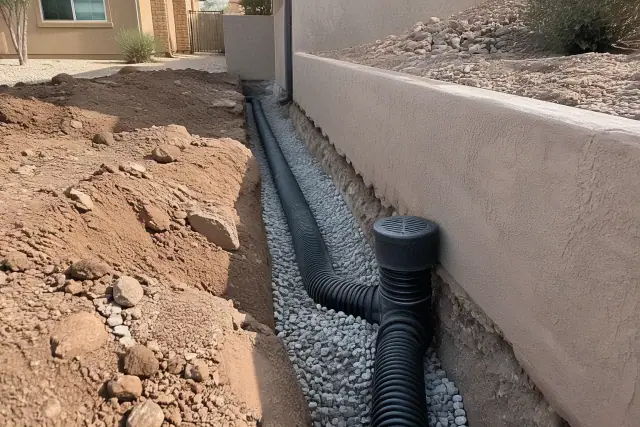
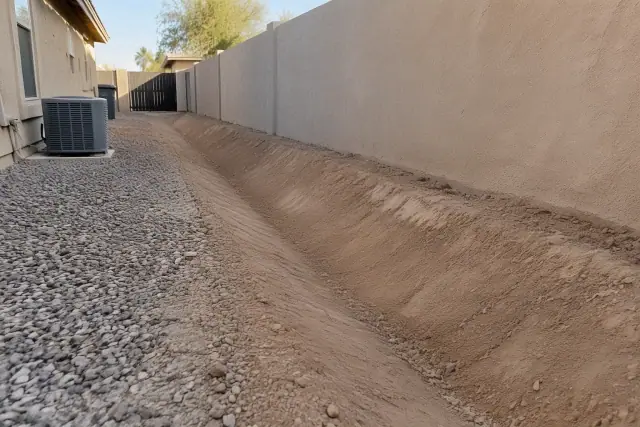
Surface drainage and swale grading excavation in a Mesa, AZ residential side yard.

We shape and regrade swales so surface runoff has a defined route across the property. Laser and GPS grade checks help identify low spots; even a half-percent grading error can leave a swale ponding instead of draining.

Request Estimate

French Drain Excavation

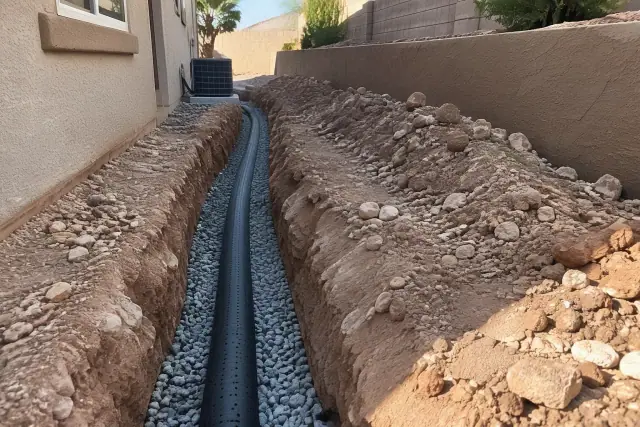
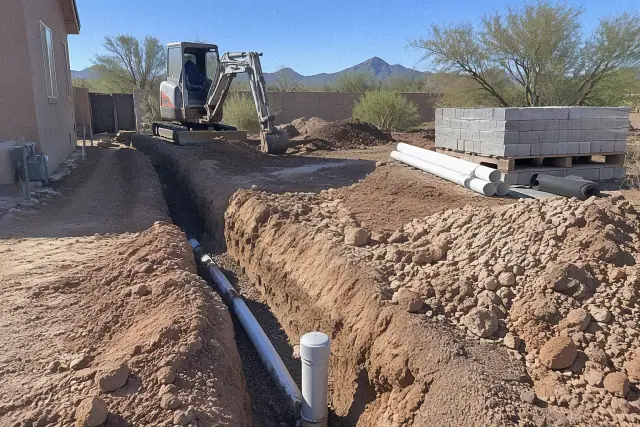
French drain excavation in a Mesa, AZ residential yard showing a perforated pipe and gravel backfill.

We excavate subsurface drainage trenches for perforated pipe bedded in three-quarter-inch drain rock and wrapped in filter fabric. The trench layout follows the site's drainage needs and soil conditions.

Request Estimate

Catch Basin & Drainpipe Installation

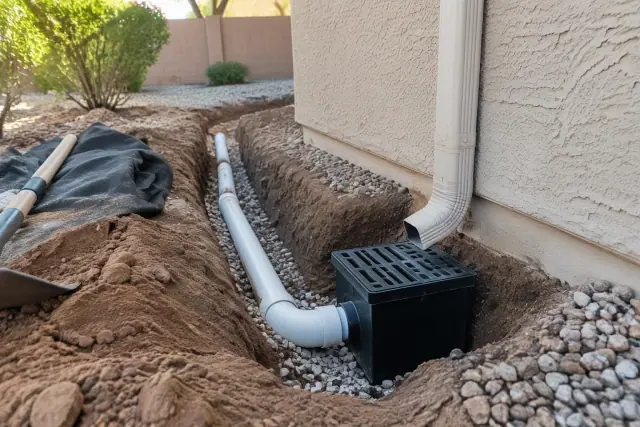
Catch basin and drainpipe installation for residential drainage in Mesa, AZ.

Catch basins collect runoff and connect to solid PVC drainage pipe. We establish the pipe route to an approved retention area, street outlet, or municipal storm drain connection according to what is allowed for the parcel.

Request Estimate

Retention & Detention Basin Construction

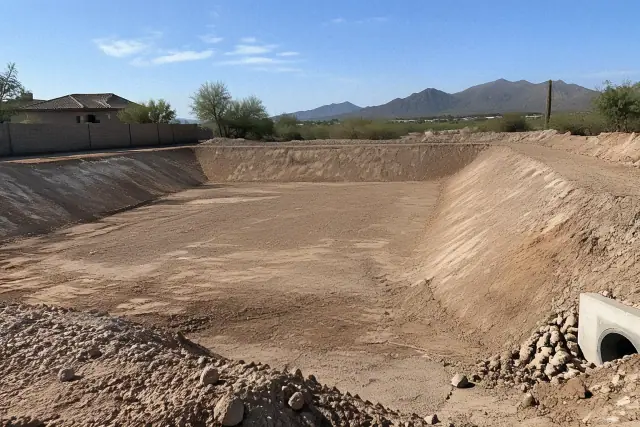
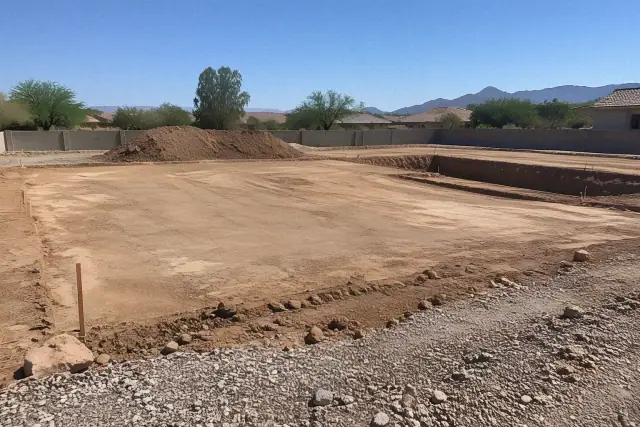
Contractor progress photo of retention basin construction in Mesa, AZ, showing caliche soil and excavation.

Basin excavation follows the storage volume and side-slope ratio in the civil engineer's drainage report. Typical specified slopes are 4:1 or 3:1, with the final design governing maintenance access, safety, and the extent of the excavation.

Request Estimate

Basin Re-Excavation & Desilting

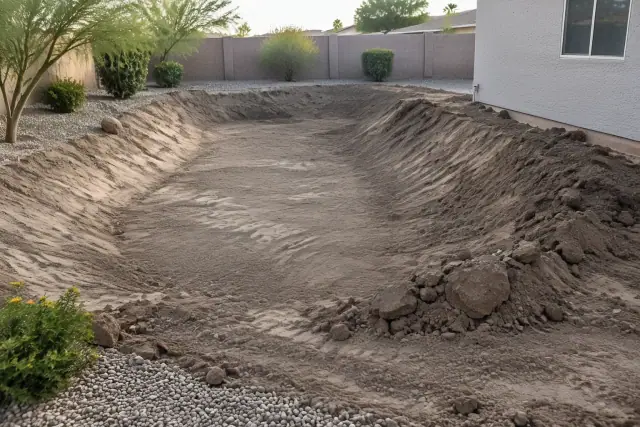
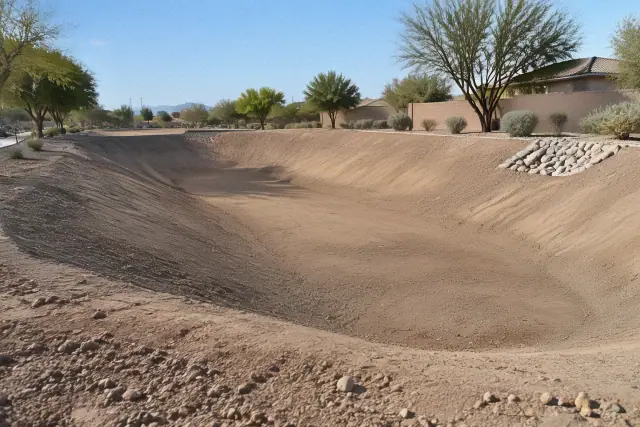
Freshly excavated retention basin in Mesa, AZ, showing sediment removal lines and piled silt near desert gravel and a stucco

Sediment can reduce a basin's working volume, sometimes by 10 to 20 percent within a few years in high-silt areas. We re-excavate and desilt HOA-maintained and commercial retention areas to restore their designed capacity.

Request Estimate

Storm Drain Connections

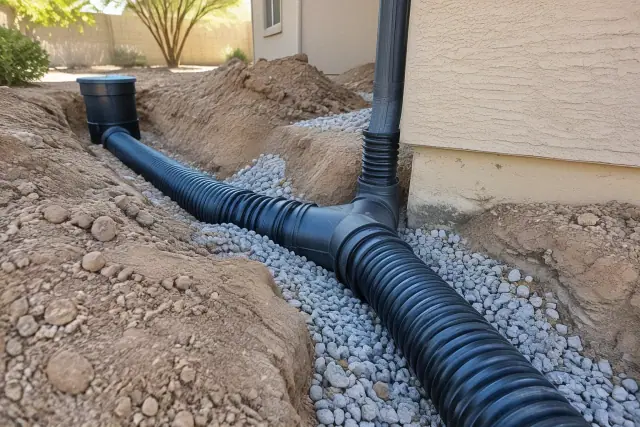
Storm drain connections with gravel bedding and corrugated pipe at a residential property in Mesa, AZ.

Where the parcel allows a municipal tie-in, we excavate the route to the designated storm drain connection point. The connection and its elevations need to work with the site's drainage plan and the City of Mesa's requirements.

Request Estimate
Match the Scope to the Site

Drainage Earthwork for Different Properties

A backyard repair, subdivision basin, and commercial pad need different excavation scopes. We coordinate drainage with the surrounding clearing, grading, demolition, utility work, and material movement.

Residential drainage repairs with gravel backfill and corrugated pipe in a Mesa, AZ yard.

Residential Drainage Repairs

Standing water near the house or across a landscaped yard calls for a site-specific route, not a standard trench layout. We assess surface grades and collection points before selecting swales, area drains, or subsurface drainage.

  • Backyard ponding and low spots
  • Foundation-adjacent runoff
  • Drainage around block walls
  • Established landscaping and tree roots
  • Driveway and patio washout
Request Estimate
Freshly graded drainage retention basin and excavated earth at a commercial jobsite in Mesa, AZ.

HOA & Commercial Retention Areas

Larger retention areas need excavation that matches the engineer's volume calculations and planned grades. We work on HOA basins, retail pads, and industrial sites, including existing basins that need sediment removed.

  • New basin excavation
  • Desilting and capacity restoration
  • Specified side slopes for maintenance access
  • Coordination with civil drainage reports
  • Storm drain tie-ins where approved
Request Estimate
Compacted building pad for drainage excavation at a residential site in Mesa, AZ.

New Construction & Building Pads

Land clearing removes brush, mesquite, and construction debris before cut and fill establishes pad elevations. Rough grading brings the site within a few tenths of a foot of finish grade; finish grading brings it within a hundredth of a foot for flatwork and turf.

  • Site preparation and land clearing
  • Cut and fill balanced on site when possible
  • Foundation excavation to structural plans
  • Typical slab-on-grade footing depths of 18 to 24 inches, as specified
  • Compacted building pads prepared for foundation forms
Request Estimate
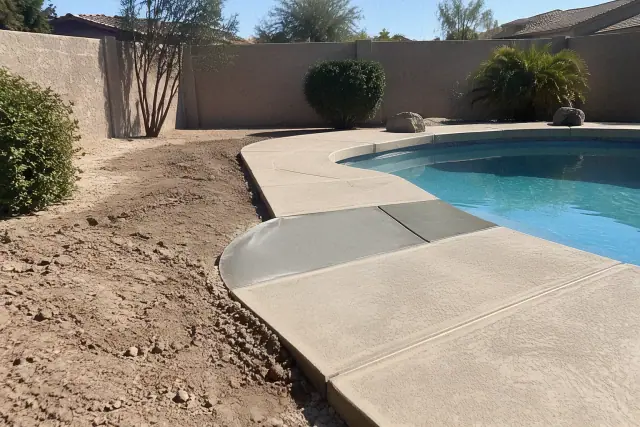
Freshly poured concrete and graded soil for pool drainage restoration in Mesa, AZ.

Pool & Concrete Site Restoration

Pool excavation follows the designer's shape and may need hydraulic hammer attachments through caliche. Pool removal and concrete demolition also affect the restored grade, so backfill, compaction, and spoil removal need to fit the next use of the site.

  • New pool excavation with access for the gunite crew
  • Pool demolition and shell removal work
  • Drainage openings for applicable partial-fill removals
  • Engineered fill compacted in lifts
  • Qualifying concrete loads routed to recycling
Request Estimate
Contractor progress photo of drainage excavation utility access and material handling in Mesa, AZ.

Utility Access & Material Handling

Utility trenching and drainage work often share limited working space. Hydro excavation uses pressurized water and vacuum extraction to expose buried lines with less mechanical contact, while hauling keeps spoils and imported materials moving.

  • Trenches for water, sewer, electrical conduit, and gas
  • Precise utility daylighting within inches
  • Rock and boulder removal on foothill lots
  • Imported engineered fill, road base, and drain rock
  • Dump truck scheduling matched to excavation progress
Request Estimate
Site Conditions Come First

Choosing the Right Drainage Approach

The choice starts with the source of the water, available grades, and the ground beneath the surface. We use field measurements and the project plans to define the earthwork before equipment arrives.

Measured Grades & Soil Testing

Laser and GPS-guided equipment checks slope percentages against the plans. Where compaction is required, testing usually targets 90 to 95 percent of maximum dry density per a Proctor test, with the geotechnical report setting the project requirement.

Equipment for Caliche & Rock

Excavators, skid steers, hydraulic hammer attachments, and compaction equipment let us match the machine to the ground. On foothill lots east of Power Road and near the Usery Mountains, rock removal and balanced cut and fill can be important parts of the scope.

Site Survey & Written Scope

We provide a free estimate, survey the site before excavation, and document the proposed work. That scope connects the drainage route, grading, hauling, and material needs so you can review what the job involves.

Local Soil Experience

Drainage Problems We Address

Mesa Excavation Co. is a licensed excavation contractor registered with the Arizona Registrar of Contractors. Our excavation crews bring local soil experience and OSHA competent-person training to the drainage problems below.

Request a Free Estimate

Backyard Ponding

Caliche hardpan roughly 18 to 36 inches below grade on many East Valley lots can limit infiltration. Water then collects in low spots, making the surface grade and a suitable drainage destination essential parts of the repair.

Runoff Near Foundations

Poor drainage can saturate the ground beside foundations and undermine block wall footings. We examine the surrounding grade and collection route to determine how the excavation can move runoff away.

Eroded Driveway & Patio Bases

Runoff can wash decomposed granite out from beneath driveways and patios. The drainage scope needs to address the water's route alongside any grading or concrete removal needed around the affected area.

Retention Basin Overflow

An undersized basin can fill before a storm has finished sending runoff into it. Intense rainfall from June through September makes calculated storage volume and the surrounding drainage grades especially important.

Silted Basins & Low Swales

A basin can lose storage as sediment accumulates, while a swale can stop draining when its grade develops low spots. Re-excavation and regrading address those different problems according to the original drainage design.

Waterlogged Tree Roots

Persistent ponding around root zones can damage mature landscaping, including trees that took a decade to establish. A drainage assessment looks at both the affected planting area and the surface flow bringing water into it.

From Survey to Finish Grade

Our Drainage Excavation Process

We connect the site survey, drainage design, excavation, and finish work in a defined sequence. The depth, soil conditions, and surrounding construction determine the equipment and coordination each project needs.

01.

Survey the Site

We review where water collects, the existing elevations, and the space available for excavation. The survey supports a free estimate and a written scope for the drainage and related earthwork.

02.

Review Plans & Locate Utilities

We coordinate drainage requirements with your civil engineer and confirm the grading permit path with the City of Mesa. Before trenching, locate requests are coordinated with utilities such as Salt River Project and Southwest Gas.

03.

Prepare the Work Area

Brush, mesquite, and construction debris are cleared where needed for the work. We arrange machine access and hauling, with water trucks available for dust control during excavation.

04.

Excavate to the Planned Profile

Crews cut drain trenches, shape swales, or excavate basin storage to the planned elevations. Caliche may require hydraulic hammer work, and deeper trenches require a protective approach appropriate to their soil and depth.

05.

Install Drainage & Compact Fill

Drainage pipe, rock, filter fabric, and catch basins are installed where specified. Backfill and building-pad material are compacted in lifts, with required testing documented before the next construction phase.

06.

Check Grades & Complete Hauling

We verify finished slopes with grading equipment and check the excavation against the project plans. Remaining spoils are hauled off, and compaction documentation supports the handoff to the builder or inspection stage.

Plan Your Drainage Work

Request a Drainage Excavation Estimate

Tell us where water collects and whether the project involves a home, HOA basin, or commercial site. Mesa Excavation Co. provides free estimates and a written scope for drainage excavation, retention work, and related grading.

Drainage & Site Work Questions

Drainage & Retention Excavation FAQs

These answers cover drainage scheduling, basin maintenance, related site preparation, and the property details to confirm before excavation.

Call About Your Project

Specific projects near Elliot Road and Ellsworth Road change as parcels are developed. The City of Mesa Development Services Department can confirm active permits and site plans for the location you have in mind. We provide site preparation and grading in the southeast growth corridor around the Elliot Road Technology Corridor and Phoenix-Mesa Gateway Airport.

Large regional and national contractors handle work such as highways, towers, and master-planned developments. Mesa Excavation Co. specializes in the site work those projects depend on: grading, drainage, trenching, and excavation. For a drainage project, the relevant fit is a contractor whose scope covers the earthwork and stormwater needs of your property.

Our site-work coverage includes Eastmark, Cadence at Gateway, the Elliot Road Technology Corridor, and downtown Mesa near the light rail corridor. For a specific active project, confirm the parcel's current plans and permits with the City of Mesa. We support the grading and utility preparation needed before building work begins.

Consistent safety training, maintained equipment, and clear scheduling are useful factors when comparing excavation employers. Mesa Excavation Co. prioritizes trained operators and equipment reliability because both affect how site work is performed. Our work centers on grading, drainage, trenching, and excavation.

Setbacks vary by zoning district, lot configuration, and any planned-area development requirements. Confirm the exact distances with the City of Mesa before staking a foundation or building pad. Corner lots and other nonstandard parcels can have different requirements, so a general distance is not enough to lay out the excavation.

For property drainage, the immediate concern is intense stormwater runoff over caliche soil that absorbs water slowly. Ponding, erosion, and overwhelmed retention areas can follow when collection routes or storage are inadequate. Our work addresses the grading, conveyance, and retention needed at the property level.

Confirm the requirements with the City of Mesa Building Safety Division before preparing a shed pad. Shed size, foundation details, and electrical or plumbing connections can affect what approvals are needed. Setback and HOA requirements also need to be checked even when a building permit exemption may apply.

A standard residential French drain or swale regrading project usually takes one to two days, depending on length and soil conditions. Single-family retention basin excavation typically takes two to four days, while a commercial retention system may take one to two weeks depending on volume and compaction requirements. Caliche can slow excavation, so we provide a project-specific timeline after the site survey.

A swale is a shaped surface route that carries runoff across the property. A French drain uses a subsurface trench with perforated pipe, drain rock, and filter fabric. The choice depends on where water collects, the available grade, and the planned destination for the drainage.

We excavate to the storage volume and side slopes called out in the civil engineer's drainage report. The design considers runoff from the lot and the applicable stormwater criteria. A basin should follow those calculations rather than a standard size used on every property.

Yes, we offer re-excavation and desilting for HOA-maintained basins and commercial retention areas. Sediment removal and regrading are directed toward restoring the basin's designed capacity. The drainage plan helps distinguish lost capacity from a basin that needs a different design.

Yes, our related services include site preparation, land clearing, utility trenching, foundation and building-pad excavation, pool excavation and removal, concrete demolition, hauling, and hydro excavation. A combined scope can account for drainage elevations while the surrounding ground is being prepared. The written scope identifies which tasks apply to your project.

We provide free estimates for drainage and retention excavation in Mesa and the surrounding East Valley, including Gilbert, Chandler, Tempe, Queen Creek, and Apache Junction. A site survey helps establish the drainage route, soil conditions, and earthwork needed. We then document the proposed scope for review.