Proudly serving Mesa, Gilbert, Chandler, Tempe, Scottsdale, Queen Creek & surrounding areasCall or Text 24/7: 480-210-6373
Stucco homes and saguaro cacti in a suburban Mesa, AZ neighborhood under bright daylight.

Mesa Excavation Co.: Site Preparation & Grading in Queen Creek, AZ

Mesa Excavation Co. handles site preparation and grading for residential and commercial properties in Queen Creek, AZ. Our earthwork services include land clearing, utility trenching, foundation excavation, and building pads. We also dig pools, remove old pools and concrete, and excavate drainage channels and retention basins. Dirt and rock hauling and hydro excavation round out the work needed to prepare your property for construction.

Caliche hardpan, shifting soil conditions, and monsoon runoff can complicate a Queen Creek excavation project. We evaluate the site and review your grading or civil plan before equipment arrives. Our crews work to planned elevations and coordinate compaction testing with your soils engineer. Contact us to discuss soil conditions, equipment access, and a written scope for your lot.

From established properties near Ellsworth and Ocotillo Roads to development toward Ironwood Road and Empire, we plan the work around the parcel. Residential projects receive a written scope, firm price, and completion timeline before mobilization.

★ ★ ★ ★ ★4.9/5 Customer Rating - 28 Years of Excavation Experience - 1,000+ Projects Completed - Licensed, Bonded & Fully Insured - Residential & Commercial Site Work
Earthwork & Removal

Excavation Services in Queen Creek, AZ

Choose the earthwork your project needs, from clearing an undeveloped lot to removing concrete before a remodel. We coordinate residential, commercial, and subdivision work across the East Valley, including projects in Apache Junction, AZ , where access and foothill terrain help determine the excavation scope.

Site Preparation & Grading
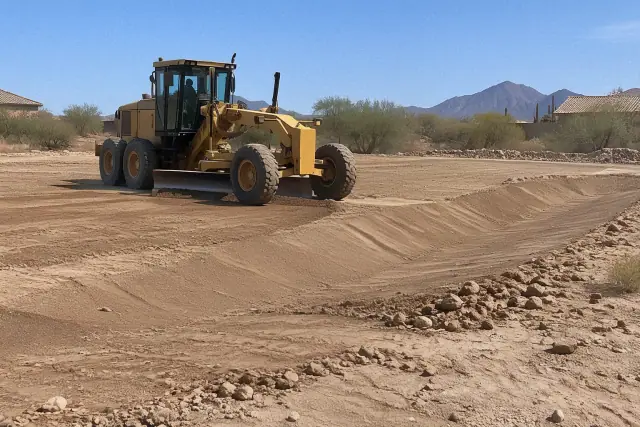
Motor grader smoothing a dirt lot for final grading during site preparation in Queen Creek, AZ.

We rough-grade, finish-grade, and re-grade residential lots, additions, and commercial sites. Cut-and-fill work follows plan elevations, with soil compacted in lifts before concrete or utility installation. Explore Service

Explore Service
Land Clearing

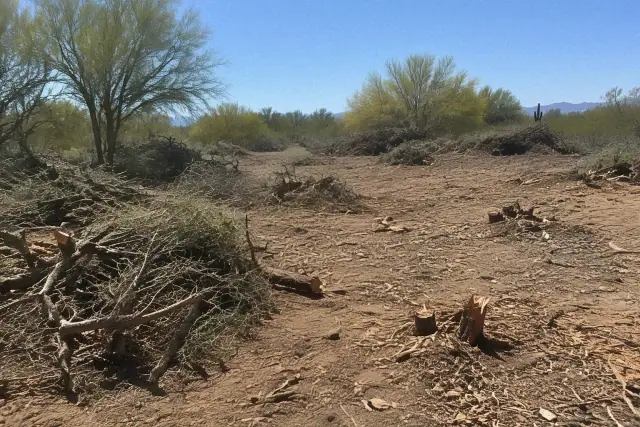
Land clearing prep on a rugged desert plot with chipped brush and root stumps in Queen Creek, AZ.

Clear mesquite, creosote, and desert brush before construction starts. We grub root balls and haul vegetative debris off-site so buried roots and leftover material do not interfere with lot preparation. Explore Service

Explore Service
Utility Trenching

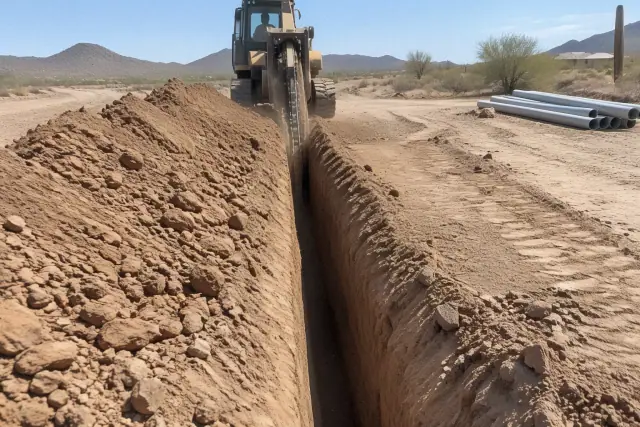
Trenching machine cutting a deep channel for underground pipes in Queen Creek, AZ.

We excavate trenches for water, sewer, electrical, and irrigation lines. Utility work starts with an Arizona 811 Blue Stake locate request at least two full working days before digging, followed by planning around existing infrastructure. Explore Service

Explore Service
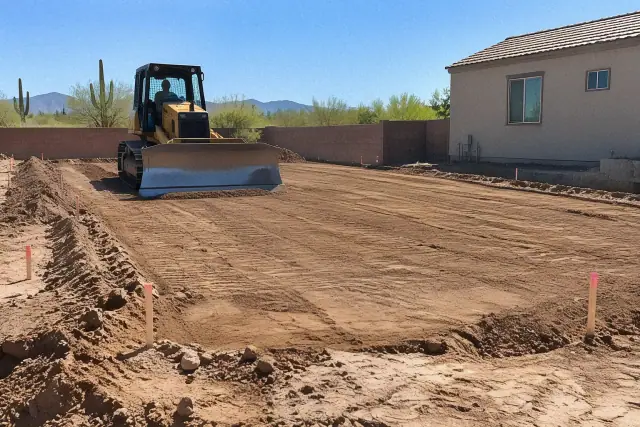
Foundation Excavation & Building Pads

Bulldozer leveling earth for a building pad during foundation excavation in Queen Creek, AZ.

Footings and stem walls are excavated to engineered depths and dimensions. We prepare pads for custom homes, shops, and commercial structures with compaction targets of 90 to 95 percent Modified Proctor density, subject to the project's engineered specifications and soils testing.

Pool Excavation

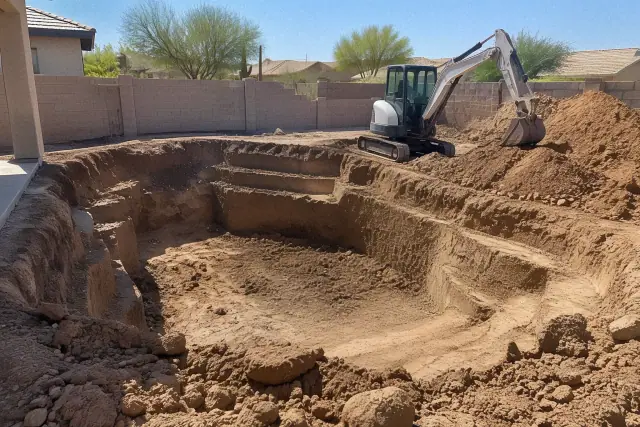
Compact excavator digging backyard pool contours in Queen Creek, AZ.

Pool digs follow the planned shape, depth, and bond beam elevation. We coordinate equipment access, spoil removal, and shoring where tight side yards limit the working room available in newer subdivisions.

Pool Demolition & Removal

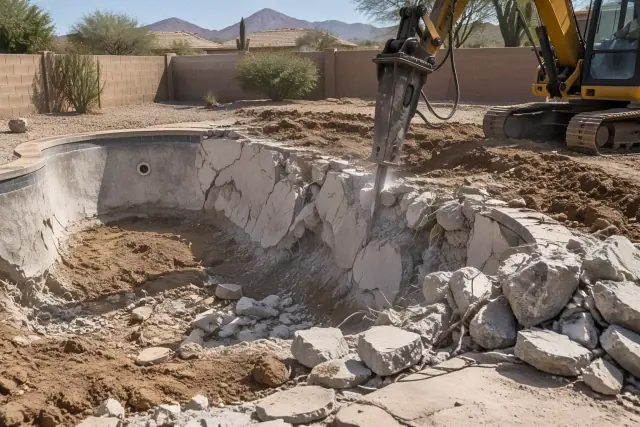
Hydraulic breaker demolishing an inground swimming pool in Queen Creek, AZ.

We handle full pool removal and partial fill-and-collapse demolition, with the permitted scope established before work. Engineered backfill and compaction help limit settling in the former pool area.

Concrete Demolition & Removal

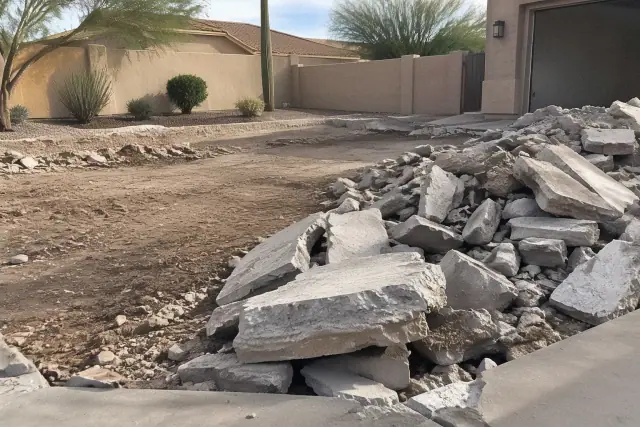
Fractured grey concrete rubble piled next to a sub-base during a project in Queen Creek, AZ.

Remove unwanted driveways, slabs, and other concrete flatwork before rebuilding. Our crews saw-cut, break, and haul concrete to licensed recycling or disposal facilities, clearing the work area for the next phase.

Drainage & Retention Excavation

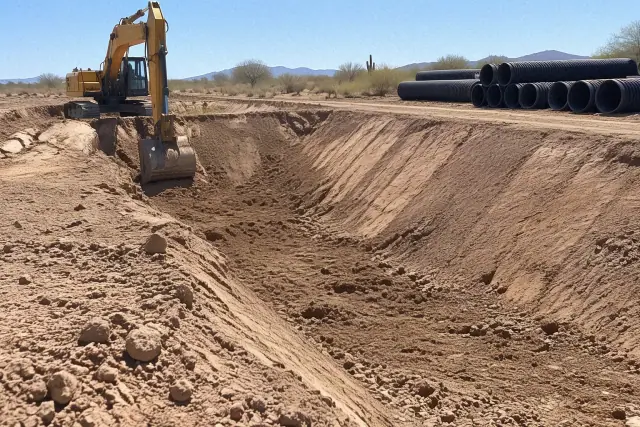
Tracked excavator digging a sloped drainage trench for an underground stormwater system in Queen Creek, AZ.

We excavate swales, channels, and area drains to direct runoff away from structures. Retention and detention basins are shaped to the project's design-storm volume and required drainage timeframe, following the applicable stormwater plan.

Dirt & Rock Hauling

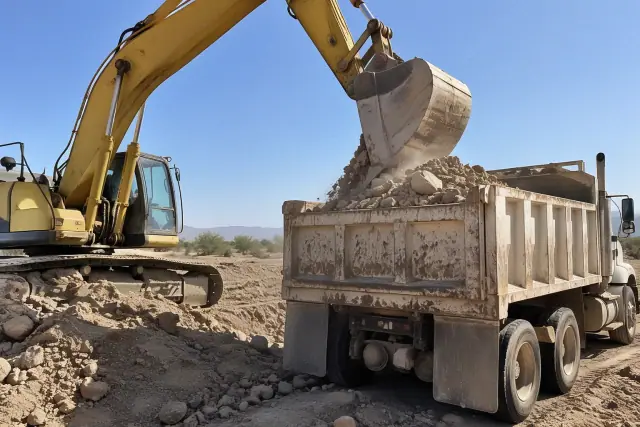
Excavator dumping heavy stone and earth into an industrial haul truck in Queen Creek, AZ.

We export excavation spoils and import fill dirt by the truckload, with hauling costs tied to cubic yards and travel distance. Loads can include native rock, caliche chunks, and oversized material; balancing cut and fill on-site can reduce the amount hauled.

Hydro Excavation

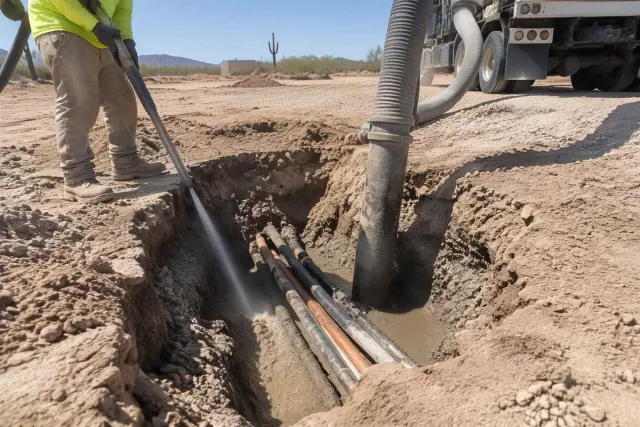
Hydro excavation slurry trench and vacuum hose in caliche soil in Queen Creek, AZ.

Pressurized water and a vacuum system expose buried utilities where a bucket or blade could damage existing lines. We use hydro excavation near gas, electric, and fiber infrastructure when marked locations alone do not establish the exact depth.

Before Equipment Arrives

Plan the Right Excavation Scope for Queen Creek, AZ

A useful excavation scope accounts for the ground, the approved plan, and the room available to work. Review these project details before choosing equipment or comparing estimates so soil treatment, grading, and removal needs are included from the start.

Match Equipment to the Ground

Caliche may need dozer ripping or a hoe-mounted breaker before excavation can progress. Mini excavators suit tight residential lots, while full-size trackhoes handle larger commercial cuts and subdivision earthmoving.

Start with the Civil Plan

Use engineered elevations, footing dimensions, and drainage details to define the work. We review approved civil or grading plans so cuts, fills, and building pads support the intended construction.

Plan Side-Yard Access

Pool digs and backyard excavation depend on the route equipment can take through the property. Include side-yard clearance, spoil removal, and any needed shoring in the scope before scheduling machinery.

Account for Runoff

Drainage regrading and retention excavation address different parts of a runoff problem. Review where water collects, how it moves past structures, and the basin capacity called for by the grading plan.

Include Material Hauling

A grading estimate needs to account for soil that leaves the lot and fill that comes in. Native rock, caliche, demolished concrete, and vegetative debris affect hauling needs and the sequence of site cleanup.

Confirm Testing Requirements

A level-looking surface does not establish that a building pad is ready for foundation work. Coordinate lift-by-lift density testing with the soils engineer and use the engineered compaction requirements to assess readiness.

Queen Creek Soil & Site Issues

Ground Conditions That Complicate Excavation

Queen Creek lots can change from rockier material near the San Tan Mountains to heavier clay toward the Gila River floodplain. Local soil and drainage conditions shape the excavation method, while neighboring homes, existing utilities, and monsoon storms affect how the work proceeds.

Request a Site Evaluation

Caliche Hardpan

Cemented calcium carbonate can form a layer a few inches to several feet thick beneath the topsoil. This hardpan may require ripping or breaker work before footings, trenches, or cuts can reach the planned depth.

Water Ponding Near Structures

Poor grades can leave runoff standing beside slabs and foundations after a storm. Swale and channel excavation, along with correction of failed drainage grades, helps establish a path for that water.

Moisture-Sensitive Clay

Heavier clay soils in lower-lying areas expand and contract as moisture changes. Drainage planning and engineered pad preparation matter where that movement can contribute to cracked flatwork or foundation problems.

Dust from Disturbed Ground

Clearing, excavation, and hauling can send dust toward neighboring homes and work areas. We use water trucks and soil stabilizers as part of site dust control, with permit requirements checked for the parcel's jurisdiction.

Congested Underground Utilities

Existing gas, electric, and fiber lines can constrain trench routes and equipment use. Locate marks indicate approximate positions; hydro excavation helps expose lines where their exact depth must be established.

Storm-Interrupted Grading

Monsoon season, typically mid-June through September, can leave active work areas wet after a single storm. Rain can interrupt grading and affect compaction quality, so drainage and erosion control need attention before the pad is finished.

Local Earthwork Experience

Why Choose Mesa Excavation Co. in Queen Creek, AZ

We connect site evaluation, excavation, hauling, and compaction testing within the project scope. That coordination matters when a custom home, retail pad, or drainage correction depends on the ground being ready for the next contractor.

Local Soil & Access Knowledge

We work across Queen Creek and the surrounding East Valley, including San Tan Valley, Gilbert, Chandler, and Mesa. Our planning accounts for changing ground conditions, residential access limits, and the town and county requirements that apply to each parcel.

Licensed, Bonded & Insured

Mesa Excavation Co. is a licensed, bonded, and insured excavation company. Property owners can verify licensing through the Arizona Registrar of Contractors as part of selecting a contractor for permitted work.

A Written Scope Before Mobilization

Residential work receives a written scope, firm price, and completion timeline before equipment arrives. The site visit helps identify access, soil, and hauling needs so the planned work is clear before excavation starts.

Our Excavation Process

From Site Walk to Compacted Pad

A standard residential lot with average soil conditions typically takes three to seven working days from clearing to a compacted pad. Commercial and subdivision schedules depend on acreage and cut-and-fill volume, while rock, heavy caliche, and weather can extend the work.

01.

Walk the Site & Review Plans

We review your civil or grading plan during a site walk, checking soil conditions, equipment access, and the intended construction. That evaluation establishes the excavation scope before machinery is scheduled.

02.

Coordinate Locates & Permits

An Arizona 811 Blue Stake locate comes before ground disturbance. We confirm the applicable grading, dust-control, and stormwater requirements for the parcel and account for any HOA-approved grading plan.

03.

Clear Vegetation & Strip Topsoil

Crews remove brush, grub roots, and strip topsoil from the work area. Vegetation and construction debris are hauled off-site so rough grading can proceed on a cleared lot.

04.

Rough-Grade to Plan Elevations

We cut and fill to bring the lot within a few tenths of a foot of finish elevation. Hard caliche or rock is ripped or broken as needed, and the cut-and-fill balance guides import and export hauling.

05.

Fine-Grade & Compact in Lifts

We refine the grade and compact soil in lifts to the engineered specifications. Density testing is coordinated with your soils engineer at each lift so compaction can be assessed as the pad is built.

06.

Document Testing & Finish Cleanup

Compaction documentation is prepared for the building inspector, and the pad is not considered finished until it passes testing. Remaining excavation spoils and debris are removed as the site is prepared for the next construction phase.

Project Applications

Earthwork for Homes, Redevelopment & Businesses

Case Study 1: Residential lot preparation: Custom home sites, retaining wall footings, pool digs, and driveway preparation need a scope suited to the property. We account for tight side yards, nearby neighbors, and HOA grading plans in communities such as Encanterra, Meridian, and Hastings Farms.

Case Study 2: Commercial construction: Building pads, utility trenches, and retention basins support retail, restaurant, medical office, and light industrial projects. Work along Ellsworth Road and the Queen Creek Marketplace corridor calls for coordination with civil engineers, soils engineers, and general contractors.

Case Study 3: Remodeling and redevelopment: Removing an old pool, driveway, or slab opens the work area for its next use. Pool backfill, concrete disposal, and final debris hauling are included according to the agreed removal scope.

Plan Your Earthwork

Request a Queen Creek Excavation Estimate

Tell us about your lot, grading plan, access, and the work you need completed. We can discuss site preparation, trenching, pool or concrete removal, and hauling, then arrange a site visit for a written estimate.

Queen Creek Project Questions

Excavation & Grading FAQs for Queen Creek, AZ

Get answers about local ground conditions, project costs, permits, access, and preparing your lot for construction. Your site's plans and soil conditions determine the final excavation scope.

Call About Your Project

Queen Creek grew from 59,519 residents at the 2020 census to an estimated 83,700 in 2024. New master-planned communities, custom homes, and infill construction create demand for building pads, foundation excavation, and pool digs. The excavation scope still depends on each lot's access, soil, and engineered plan.

We handle building pads, utility trenching, and retention basin excavation for commercial construction. Retail and restaurant development along Ellsworth Road and near Queen Creek Marketplace are part of the local project mix. Our East Valley experience also includes pads for medical offices and light industrial buildings.

Local ground conditions range from caliche and rock to moisture-sensitive clay, and access restrictions vary between properties. Familiarity with local grading plans, HOA requirements, and town and county review helps define the work before mobilization. We review those details during the site evaluation and coordinate soils testing for the project.

Hydro excavation uses pressurized water and vacuum equipment to expose buried infrastructure. It is useful near existing gas, electric, and fiber lines where a locate marks approximate position without confirming depth. The method is slower than mechanical digging but can reduce the risk of damage around congested utilities.

Typical Phoenix metro residential site preparation costs range from $1,300 to $5,600, averaging around $3,800, with lot size, access, and soil conditions affecting the total. Grading commonly runs $0.40 to $2.00 per square foot, while heavily sloped or rock-laden acreage can cost $15,000 or more per acre. Smaller or specialized jobs may involve equipment rates of roughly $125 to $300 per hour, depending on machine size. We provide a written estimate after a site visit to establish the price for your scope.

Permit needs depend on the parcel's jurisdiction, the work, and the area disturbed. Within Maricopa County's air-quality jurisdiction, Rule 310 requires a dust-control permit for disturbance of 0.1 acre or more. ADEQ construction stormwater coverage depends on qualifying discharges and disturbance of one acre or more, including smaller sites within a larger common plan of development. We review the applicable grading, dust-control, and stormwater requirements before mobilization.

Heavy caliche, rock, and steep slope corrections can add ripping, breaker work, or hauling before grading proceeds. Commercial pads and subdivision phases also depend on acreage and cut-and-fill volume. Monsoon storms can interrupt work when site conditions affect safety or compaction quality.

We use mini excavators for tight residential lots and plan the access route during the site evaluation. For pool digs, the scope also accounts for spoil removal and any shoring needed around the excavation. Access must be reviewed before the equipment and schedule are confirmed.

Rough grading establishes the main cuts and fills needed to approach the plan elevations. Fine grading refines those elevations and drainage details as the pad is prepared for construction. Compaction and soils testing are coordinated with this work so readiness is assessed beyond surface appearance.

We work from engineered plans and coordinate density testing with your soils engineer as soil is compacted in lifts. The testing documents whether the project specifications are met before foundation forms go in. We prepare the test documentation for the building inspector and do not call a pad finished until it passes.

Yes, we handle full pool removal and partial fill-and-collapse demolition. The permitted scope determines the removal method, followed by engineered backfill and compaction to help prevent settling. We establish the work needed for the property before demolition begins.

We haul dirt, native rock, caliche chunks, vegetation, and demolition spoils off-site according to the project scope. Concrete goes to licensed recycling or disposal facilities. Where the grading plan allows, balancing cut and fill on the lot can reduce export and import hauling.

Drainage regrading can correct failed grades, while swales, channels, and area drains create paths for runoff away from structures. Retention or detention basins address the storage and drainage volume specified in a stormwater plan. A site evaluation helps determine which work fits the property's drainage problem.

The service area includes Queen Creek and nearby East Valley communities, with work in Ironwood Crossing, San Tan Heights, Encanterra, The Preserve, Meridian, and Hastings Farms. We also handle projects in San Tan Valley, Gilbert, Chandler, and Mesa. Site access and the governing jurisdiction are reviewed for each property.

Have your civil, grading, or foundation plans available, along with any HOA-approved grading requirements. Describe the work area, known access limits, and whether the project involves clearing, drainage, utilities, or removals. We review the site before providing a written estimate; residential projects receive a scope, firm price, and timeline before equipment mobilization.