Proudly serving Mesa, Gilbert, Chandler, Tempe, Scottsdale, Queen Creek & surrounding areasCall or Text 24/7: 480-210-6373
Stucco homes and saguaro cacti in a suburban Mesa, AZ neighborhood under bright daylight.

Site Preparation & Grading in Phoenix, AZ

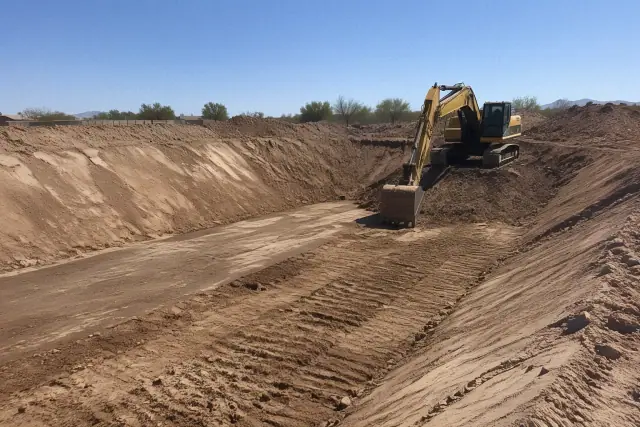
Mesa Excavation Co. provides site preparation and grading for residential and commercial projects throughout Phoenix, Arizona. We clear desert lots, shape building sites, and trench for water, sewer, and electrical connections. Our earthwork also covers foundation excavation, building pads, and backyard pool digs. When existing improvements need to go, we handle pool and concrete demolition along with dirt and rock hauling.

Caliche hardpan, expansive clay, and loose alluvial soils make ground conditions vary from parcel to parcel. Summer monsoon runoff adds another concern when a lot slopes toward a building or lacks a clear drainage route. We review civil plans and geotechnical information, then match excavation equipment and compaction methods to the site. Discuss your access, soil, and drainage concerns with our crew before work begins.

From a half-acre custom-home lot in Ahwatukee to a commercial pad near Sky Harbor, we coordinate earthwork with your builder and the trades that follow. Call for a free estimate on site preparation, grading, or demolition.

★ ★ ★ ★ ★4.9/5 Customer Rating - 28 Years of Excavation Experience - 1,000+ Projects Completed - Licensed, Bonded & Fully Insured - Residential & Commercial Site Work
Residential and Commercial Earthwork

Excavation Services in Phoenix, AZ

Our work ranges from infill lots in Encanto to commercial parcels across the West Valley. Whether a project is in Phoenix or Fountain Hills, AZ , we start by reviewing access, civil plans, soil conditions, and the intended drainage path. The services below cover the earthwork needed from initial clearing through final grading and material removal.

Site Preparation & Grading
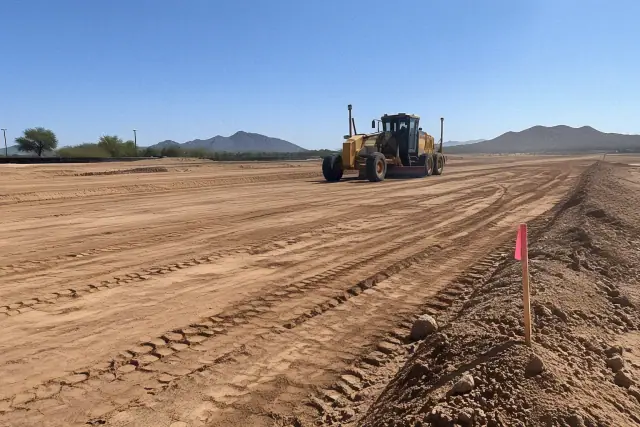
Crew member taking a progress photo of a leveled earth site in Phoenix, AZ.

We handle clearing, rough grading, cut-and-fill balancing, finish grading, and lot leveling to prepare land for construction. Civil plans and geotechnical reports guide elevations and compaction, from a quarter-acre residential lot to a multi-acre commercial pad. Utility rough-in and testing are coordinated with your builder. Explore Service

Explore Service
Land Clearing

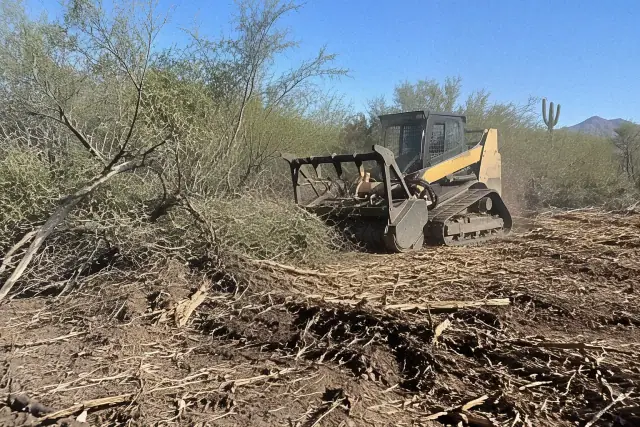
Forestry mulcher clearing dense brush and small trees from an overgrown plot in Phoenix, AZ.

Brush, mesquite, palo verde stumps, old fencing, and construction debris can obstruct a desert building site. We clear and grub the work area, then haul material away or stockpile it to suit the project. Dust control is part of planning the clearing work. Explore Service

Explore Service
Utility Trenching

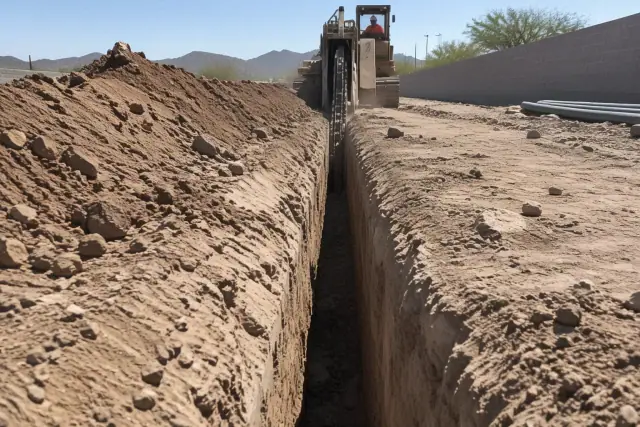
Utility trenching machine cutting a narrow channel for pipe installation in Phoenix, AZ.

We excavate trenches for water, sewer, electrical, and septic connections on new builds and remodels. Utility locates, trench shoring, bedding selection, and backfill compaction all shape the work. Outlying Maricopa County properties may also need trenching for private systems. Explore Service

Explore Service
Foundation Excavation & Building Pads

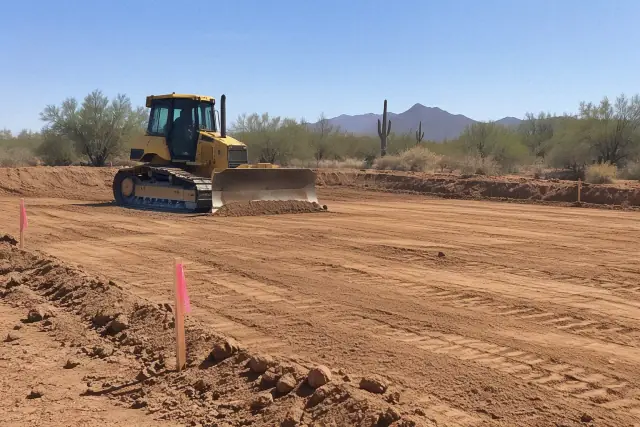
Bulldozer leveling a compacted earthen pad for a foundation in Phoenix, AZ.

Slab-on-grade, stem wall, and basement foundations require excavation to the depths shown on the plans. We prepare building pads and compact subgrade to the soils report specification, usually 90 to 95 percent standard Proctor. Grade and compaction checks help identify problems before the next construction phase.

Pool Excavation

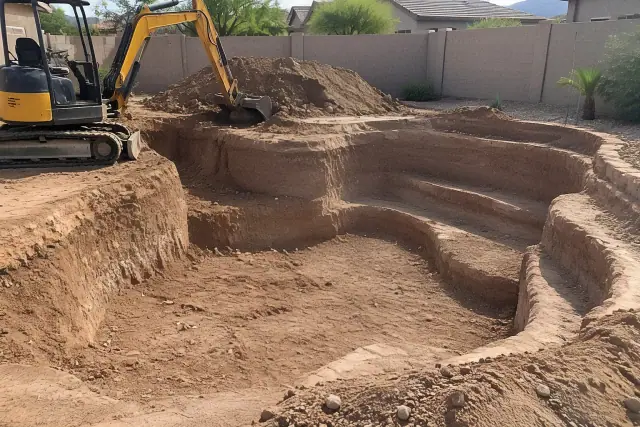
Compact excavator digging a residential pool in a backyard in Phoenix, AZ.

A backyard pool dig needs accurate depth control and room for the planned plumbing and rebar. We account for expansive soils and the access available around existing structures. Equipment is sized to the work area so excavation can proceed within the limits of the yard.

Pool Demolition & Removal

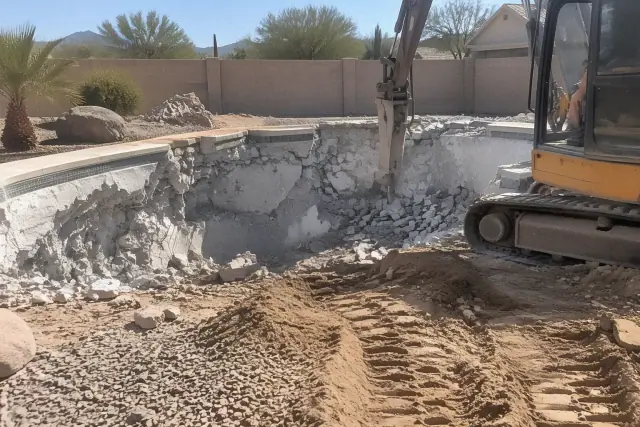
Hydraulic breaker demolishing an empty concrete pool during excavation in Phoenix, AZ.

We handle partial and full pool demolition, shell removal, and backfilling with engineered fill compacted in lifts. Concrete may be crushed on-site where practical. Demolition permit coordination is included before work starts, and the planned use of the reclaimed yard helps define the scope.

Concrete Demolition & Removal

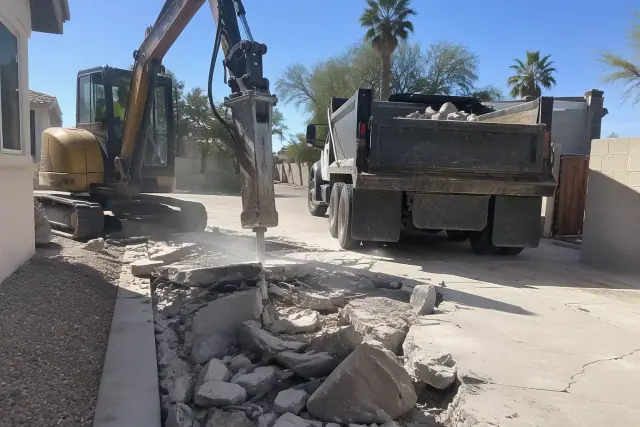
Heavy machinery breaking concrete driveway and loading debris into a dump truck in Phoenix, AZ.

Driveways, patios, walkways, pool decks, and old foundations often need removal ahead of a remodel or new build. We break, remove, and haul concrete debris. Where volume allows, crushed concrete can be recycled as compactable base material to reduce disposal and trucking.

Drainage & Retention Excavation

Tracked excavator digging a wide sloped trench in arid desert soil in Phoenix, AZ.

We excavate retention and detention basins, grade swales, and install area drains to address runoff. Civil drainage plans guide the elevations and flow paths needed around buildings and paved areas. This work supports both new construction and drainage retrofits on existing properties.

Dirt & Rock Hauling

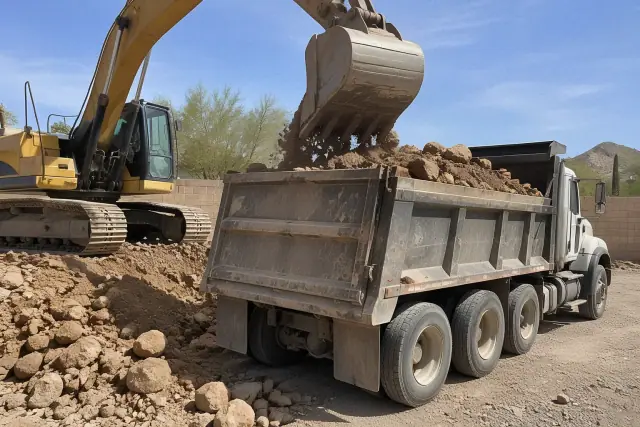
Excavator dumping heavy stone and earth into an industrial haul truck on a jobsite in Phoenix, AZ.

Excess spoil, rock, and imported fill need a hauling plan that fits the grading sequence. We coordinate removal and delivery with cut-and-fill work so material is available when needed. Balancing usable soil on-site can reduce unnecessary trips and keep the work area accessible.

Hydro Excavation

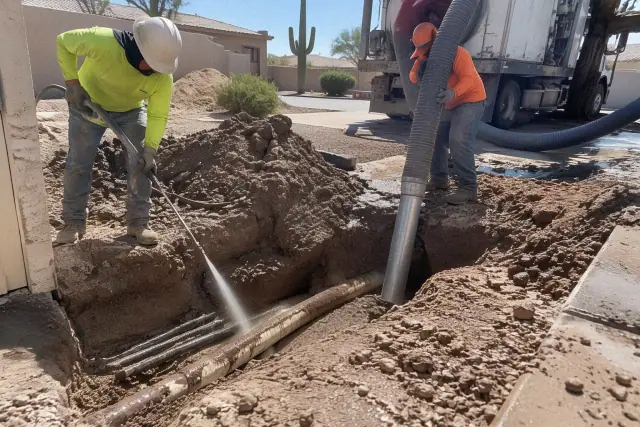
Hydro excavation exposing underground utilities in a residential yard in Phoenix, AZ.

Pressurized water and vacuum extraction expose buried utilities before mechanical digging reaches them. We use hydro excavation near existing gas, fiber, and electrical lines and in congested urban work areas. It is slower than open trenching but helps reduce the risk of striking underground infrastructure.

Before Equipment Arrives

Plan the Right Earthwork Approach in Phoenix

The right scope depends on what you plan to build, how equipment can reach it, and what the ground conditions require. A landscaped Arcadia lot and a raw West Valley commercial parcel call for different access and material-handling plans. Review these factors before setting the excavation sequence.

Start with the Soils Report

Geotechnical findings help determine excavation depth, subgrade preparation, and the required moisture-density relationship. We reference available soil data and samples instead of assuming the same compaction method will suit every parcel. Caliche, clay, and sandy fill each need a site-specific approach.

Match Equipment to Site Access

Trackhoes, skid steers, dozers, and compaction equipment must fit the job and the available approach. Tight side yards and mature landscaping can limit movement on residential infill projects. Review the route around block walls and existing structures before choosing equipment.

Set Drainage Priorities Early

Finished elevations need to direct runoff away from structures and toward the planned swale, drain, or basin. We review those flow paths alongside the civil grading plan before earthwork begins. Leaving drainage decisions until after concrete is placed can make corrections more disruptive.

Balance Cut and Fill

Cut-and-fill planning moves soil from high areas to low areas to reach design elevations. We calculate earthwork volumes from civil plans and sequence the work to limit unnecessary import and export. On larger commercial parcels, that balance helps control hauling needs.

Specify Compaction and Testing

Commercial building pads typically call for 95 percent standard Proctor compaction or higher, as specified by the engineer. We compact in controlled lifts, usually 8 to 12 inches, and adjust moisture for the soil type. Field density testing by a licensed geotechnical firm verifies the required result.

Plan Hauling and Material Reuse

Decide where cleared vegetation, demolished concrete, and excess spoil will go before those materials block access. Some projects allow on-site stockpiles or crushed-concrete reuse; others need material hauled away. We coordinate those choices with the grading and construction sequence.

Local Soil and Access Concerns

Ground Conditions That Complicate Phoenix Excavation

A site can look straightforward at the surface and still contain hardpan, variable fill, or buried utilities. Runoff and access restrictions add challenges that affect equipment selection and the order of work. Identifying these conditions early makes the excavation scope more useful.

Discuss Your Site

Caliche Hardpan

Caliche is cemented calcium carbonate that can range from a few inches to several feet thick. A layer encountered two feet below grade instead of six can change how a dig proceeds. We use hoe-mounted breakers and ripper teeth when standard attachments cannot break through efficiently.

Expansive Clay Pockets

Clay pockets occur in parts of the East Valley and require attention to moisture during compaction. A method suited to sandy material may not achieve the specified density in clay. Soil sampling and geotechnical guidance help us adjust preparation before a pad or trench is covered.

Monsoon Runoff and Ponding

Intense summer rainfall, roughly June through September, can send runoff across ground that has been baked hard for months. Poorly graded lots may collect water near foundations or concentrate flow along slopes. Swales, retention areas, and corrected elevations give that water a planned route.

Loose Sand and Variable Fill

Loose alluvial sand near historic wash channels and inconsistent fill can complicate subgrade preparation. Density and moisture need checking as material is placed, rather than relying on the finished surface alone. Controlled lifts help crews respond to changing soil conditions.

Congested Underground Utilities

Existing gas, fiber, electrical, water, and sewer lines can limit where mechanical excavation is appropriate. Arizona Blue Stake locates are part of planning the dig, and hydro excavation can daylight utilities where closer inspection is needed. The trench route and excavation method must account for what is already underground.

Restricted Access Around Structures

Infill lots may leave limited room between a house, block wall, mature landscaping, and the proposed work area. Equipment and haul routes need to suit those constraints before excavation starts. We size residential machinery for the available space and coordinate material movement around existing improvements.

Local Project Experience

Why Choose Mesa Excavation Co. for Phoenix Earthwork

Mesa Excavation Co. is a licensed, bonded, and insured excavation contractor serving residential and commercial properties across the Phoenix metro. Our crews work on custom infill lots, subdivision pads, retail sites, and light industrial projects. We carry equipment to perform most project phases ourselves and coordinate with your general contractor as the work progresses.

Phoenix and County Permit Coordination

We review the applicable City of Phoenix or county permit requirements as part of project planning. Grading, trenching, demolition, and dust control need attention alongside the construction schedule. Our teams work with Maricopa Association of Governments specifications and Maricopa County Rule 310 dust-control requirements relevant to the work.

Experience Across Property Types

Single-family pads, commercial lots, parking areas, and drainage retrofits each have different excavation priorities. Our crews have worked across those settings, including properties developed before current stormwater standards. That experience helps us account for existing improvements as well as the next construction phase.

Clear Communication When Conditions Change

If field conditions differ from the geotechnical report, we flag the issue and work through the next step with you and the project team. Compaction testing is coordinated before required checks are covered by backfill. Keeping those decisions visible helps protect the inspection and construction schedule.

From Site Walk to Final Grade

Our Site Preparation and Grading Process

Each project starts with a site walk and review of civil plans, geotechnical information, and applicable permit requirements. We coordinate clearing, grading, excavation, testing, and hauling with your general contractor. The sequence below keeps each stage connected to the work that follows.

01.

Review Plans and Locate Utilities

We assess the site, review grading elevations and the soils report, and identify permit considerations. Arizona Blue Stake utility locates help establish where existing infrastructure affects the dig. Access and the planned building or drainage layout guide the initial work sequence.

02.

Clear and Prepare the Lot

Brush, stumps, fencing, and debris are removed from the work area before grading. Materials are hauled away or stockpiled according to the project plan. Clearing and grubbing open up the site for equipment and the first earthwork passes.

03.

Rough Grade and Balance Earthwork

We cut high areas and fill low areas to approach the elevations shown on the civil plan. Reusable soil is balanced across the site where practical, with import or export arranged as needed. This stage establishes the working grade for excavation and subgrade preparation.

04.

Excavate Foundations and Trenches

Foundations, utility trenches, and retention basins are excavated to their planned dimensions and depths. The crew selects attachments and excavation methods for the soil and nearby infrastructure. Unexpected ground conditions are brought to the project team before work proceeds.

05.

Compact and Verify Subgrade

Material is placed and compacted in controlled lifts with moisture adjusted for the soil. Required testing is coordinated with your engineer or geotechnical firm before backfill is covered. Grade and density are checked against the project specifications.

06.

Finish Grade and Haul Remaining Material

Fine grading and final elevation checks prepare the site for subsequent trades. We coordinate hauling for excess dirt and rock or any remaining imported fill needs. The finished subgrade and drainage paths are reviewed against the plans before the next phase starts.

Prepared for the Next Construction Phase

Earthwork Goals for Homes and Commercial Sites

Case Study 1: Residential building pads: Foundation excavation and compacted subgrade prepare custom homes, additions, casitas, and guest houses for construction. On Phoenix infill lots, equipment access and existing structures are considered alongside the foundation plan.

Case Study 2: Commercial subgrade: Retail pads, industrial buildings, multi-family developments, parking lots, and loading areas need consistent elevations and density. Coordinating cut-and-fill work with testing helps prepare these areas for base rock, paving, or building construction.

Case Study 3: Drainage improvements: Swales, drains, and retention excavation address the runoff routes around developed properties. Reviewing flow direction and elevations before work begins helps focus the grading scope on the areas causing ponding or erosion.

Discuss Your Earthwork Project

Request a Free Phoenix Excavation Estimate

Tell us what you plan to build, remove, or regrade and where the property is located. Share available civil plans, soil information, and any access or drainage concerns so we can discuss the scope. Mesa Excavation Co. provides free estimates for site preparation, grading, and demolition projects.

Planning Your Phoenix Project

Site Preparation and Grading FAQs for Phoenix, AZ

These answers cover the excavation decisions homeowners, builders, and commercial property teams commonly need to make. Project plans, site conditions, and the applicable city or county requirements determine the final scope.

Call About Your Project

Yes. Grading shapes land to a planned elevation and slope by cutting high spots and filling low spots, while excavation includes digging and removing material for foundations, trenches, and basins. Most site preparation projects need both, and we coordinate them as connected phases of the work.

Confirm your parcel zoning and the applicable lot, setback, height, and permit requirements with the City of Phoenix before scheduling site work. A guest house or accessory dwelling unit still needs foundation excavation, a compacted building pad, and utility connections. Once the building plans and approvals are clear, we can coordinate the earthwork scope with your builder.

Equipment start times depend on the applicable municipal noise rules and any seasonal provisions. We coordinate work near residential properties with local ordinance requirements. Confirm the current hours for your location with the relevant city code enforcement office when planning the schedule.

Site plan review considers civil and grading plans, drainage reports, zoning, and other requirements tied to the proposed development. Revisions or additional reviews can affect when permits are ready. We coordinate excavation and grading with that approval timeline so mobilization follows the required authorizations.

Professional grading in the Valley typically runs $0.40 to $2.00 per square foot, depending on soil conditions, cut depth, and access. Typical residential site preparation averages around $3,800, with a broader range of $1,300 to $5,600 based on lot size, vegetation, and soil conditions. These describe different scopes, so the grading rate and full site-preparation range should not be treated as interchangeable. Contact us for a free estimate for your project.

Commercial site preparation typically runs $1,500 to $5,000 per phase, with total cost driven by acreage, soil conditions, and imported fill requirements. Cut-and-fill balancing can reduce the amount of material that must be trucked in or out. Civil plans and the construction sequence help define which earthwork phases belong in the estimate.

Caliche depth, expansive clay, and loose sandy fill can vary between parcels. Those differences affect excavation attachments, moisture adjustment, and the way soil is compacted. We reference geotechnical information and field conditions instead of assuming a neighboring lot provides the full picture.

The soils report and engineer establish the density and moisture requirements for the pad. We compact material in controlled lifts and coordinate field density testing when required. Testing and grade checks are scheduled before the work is covered so the project team can address conditions that need adjustment.

Yes, we handle partial and full pool demolition and removal. The work includes breaking up the shell and placing engineered backfill in compacted lifts, with concrete crushed on-site where practical. We coordinate the required demolition permit and discuss the intended use of the reclaimed area when defining the scope.

Hydro excavation is useful when existing utilities need to be exposed before mechanical digging, especially on congested urban sites. Pressurized water loosens the material and vacuum extraction removes it around the utility. It is slower than open trenching, but it helps reduce the chance of a bucket or trencher striking a line.

Yes, our utility trenching includes water, sewer, electrical, and septic work, including private systems in outlying Maricopa County areas. Utility locates, bedding, shoring, and backfill compaction are considered as part of the trench scope. We coordinate the sequence with the project team and the planned connections.

Grading can redirect runoff where the current elevations send water toward a structure or leave it trapped in a low area. Depending on the civil drainage plan, work may include swales, retention or detention basins, and area drains. We review the flow route and site conditions before recommending the excavation scope.

Cleared material can be hauled off-site or stockpiled according to project needs. We remove concrete debris and may recycle crushed concrete as compactable base material where the volume allows. Dirt and rock hauling is coordinated with any import fill and cut-and-fill balancing required for the site.

We work throughout Phoenix, including Downtown, Arcadia, Encanto, Laveen Village, Ahwatukee Foothills, South Mountain, Desert Ridge, and Deer Valley. Our metro coverage includes Scottsdale, Tempe, Mesa, Chandler, Gilbert, Glendale, Peoria, Surprise, Avondale, Goodyear, and Buckeye. We also serve Queen Creek, Cave Creek, Paradise Valley, and unincorporated areas of Maricopa County.

Describe the proposed construction, demolition, or drainage work and the property location. Available civil plans, a geotechnical report, permit information, and details about equipment access help define the scope. Let us know about existing structures, utilities, and material that may need to be hauled away.