Mechanical Clearing
Heavy equipment is commonly used above half an acre. Dozers move bulk vegetation on open ground, while excavators grub stumps and work around tighter boundaries.
Mesa Excavation Co. explains how mechanical clearing, hand clearing, forestry mulching, and selective removal fit different Mesa properties. Caliche soil, desert vegetation, access, and the next construction phase determine which approach makes sense. Understanding those differences helps you define what should be removed, what should stay, and whether grubbing and grading belong in the same scope.
Heavy equipment is commonly used above half an acre. Dozers move bulk vegetation on open ground, while excavators grub stumps and work around tighter boundaries.
Hand clearing suits lots under a quarter acre and confined areas near walls or fencing. Selective clearing can combine hand tools and machinery to retain mature mesquite and palo verde.
Start with a site walk to mark utilities, retained vegetation, and the construction footprint. Then agree on equipment access, stump removal, debris handling, and the grading work that follows.
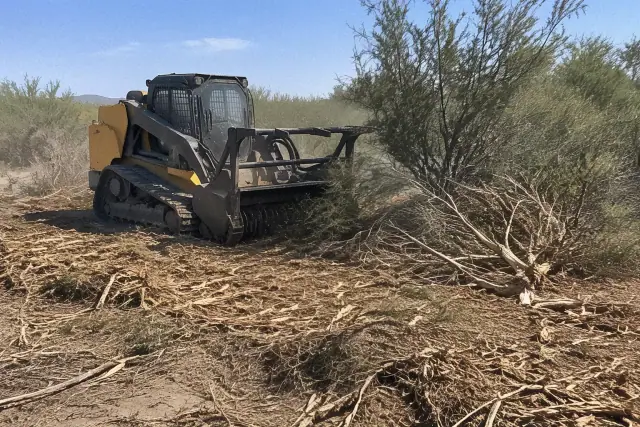
Mulching heads process creosote and brittlebush into material left on-site. This approach combines brush removal and debris processing where mulch can remain as ground cover.
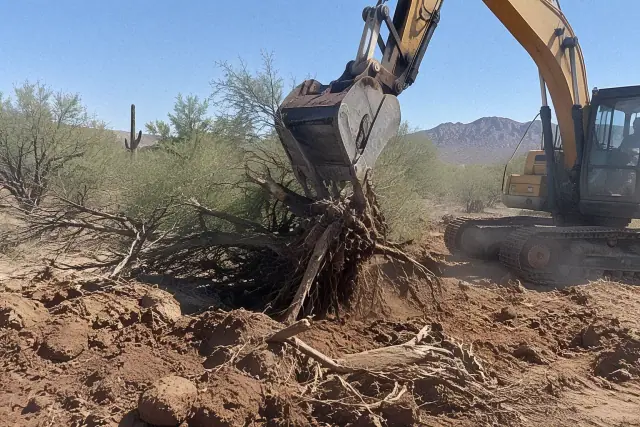
Grubbing removes the stump and root material beyond what cutting alone reaches. It matters where deep-rooted trees occupy a future building pad or utility trench.
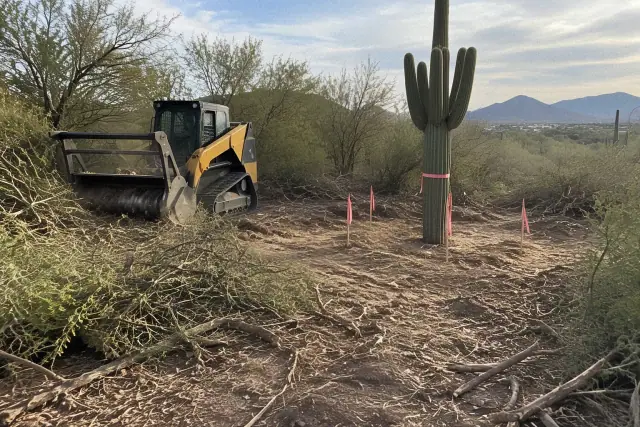
Flagging retained desert plants defines where clearing should stop. A marked saguaro helps distinguish vegetation to preserve from brush within the construction footprint.
Backyard pool sites and ADU pads may need only the construction footprint cleared. Open commercial acreage allows larger equipment, while block walls, fencing, and existing structures restrict maneuvering room.
Open creosote flats differ from dense mesquite thickets. Root balls, rock, and caliche hardpan can require excavator grubbing beyond the brush-cutting work visible above ground.
Typical residential lot clearing in Mesa takes 1-3 days. Larger commercial or multi-acre parcels can take 1-2 weeks, especially when grubbing, hauling, and rough grading are included.
Decide whether brush will become ground cover or leave the site with stumps and caliche chunks. Confirm whether debris removal will happen the same day and how haul access fits the clearing sequence.
| Method or scope | Where it fits | Work to account for |
|---|---|---|
| Dozer clearing | Larger, open parcels with room to move bulk vegetation and debris. | Pushed material forms windrows that still need hauling or chipping. |
| Excavator clearing and grubbing | Root balls, caliche pockets, and targeted removal near property boundaries. | Coordinate stump extraction, debris removal, and rough pad shaping. |
| Manual clearing | Small footprints and tight spaces beside walls, fencing, or structures. | Precise cutting takes more labor as the clearing area grows. |
| Forestry mulching | Brush that can be processed into ground cover on-site. | Mulch remains on the property; confirm any separate stump or root removal. |
| Selective clearing | Sites where mature trees or desert plants should remain. | Mark retained vegetation and combine hand tools with suitable machinery. |
| Full clear-cut clearing | Construction areas requiring vegetation removal throughout the footprint. | Specify grubbing, debris handling, and grading in addition to vegetation removal. |
Clearing removes vegetation and debris; grubbing takes out stumps and root material; grading shapes the exposed ground for drainage and construction. These tasks can share one mobilization, but they should be identified separately in the scope. An excavator can combine stump removal with rough pad shaping, while a motor grader establishes contours after brush and roots are out. A fully cleared parcel still needs its elevations, compaction, and building pad preparation addressed before foundation work. For a pool, addition, or ADU, selective clearing may leave the rest of the property undisturbed.
National land-clearing costs run roughly $1,500 to $6,000+ per acre. Denser brush and small trees up to 5 inches across can put that range at $2,700-$11,000 per acre. Light desert brush in Mesa generally falls toward the lower end, while mature mesquite, difficult access, and caliche add work. Haul distance and whether vegetation is mulched on-site also change the total. Compare quotes with the same grubbing, disposal, grading, and pad-preparation scope; combining those phases in one mobilization can reduce repeated equipment transport.
What is the lowest-cost approach? Hand tools can suit very small areas, while on-site mulching can reduce trucking and disposal for larger clearing jobs. Can mature plants stay? Selective clearing can preserve trees outside the work footprint; confirm native-plant removal or relocation requirements with the Arizona Department of Agriculture before disturbing protected plants. Are permits needed? In Maricopa County, dust-generating operations that disturb 0.1 acre or more require a dust control permit. Check City of Mesa grading requirements for the planned earthwork as well. Can one method handle the whole lot? Many properties use machinery for bulk clearing and hand work near structures or retained vegetation.
Share your lot size, vegetation, access constraints, and plans for the cleared ground. A site visit can establish what to retain, what to remove, and whether hauling, grubbing, and grading should be included in the estimate.