Price the Digging Scope
Bulk earthmoving may be priced by cubic yard, while trenching and grading often use hourly billing. Defined pool excavations and foundation pads may receive a flat bid.
Mesa Excavation Co. bases excavation quotes on site conditions because equipment size, soil and access can change the cost of the same-sized job. Caliche hardpan and rocky East Valley subsoil can add digging time, whether the project involves grading, trenching or pool removal. Understanding the pricing unit and what the quote includes makes comparisons more useful.
Bulk earthmoving may be priced by cubic yard, while trenching and grading often use hourly billing. Defined pool excavations and foundation pads may receive a flat bid.
Dense clay and rock slow bucket production, while caliche may need breaking equipment. Limited access can change the equipment choice and the time required.
Ask whether the quote includes equipment transport, spoil removal and disposal. Confirm any half-day or full-day minimum before comparing a short job by hourly rate alone.
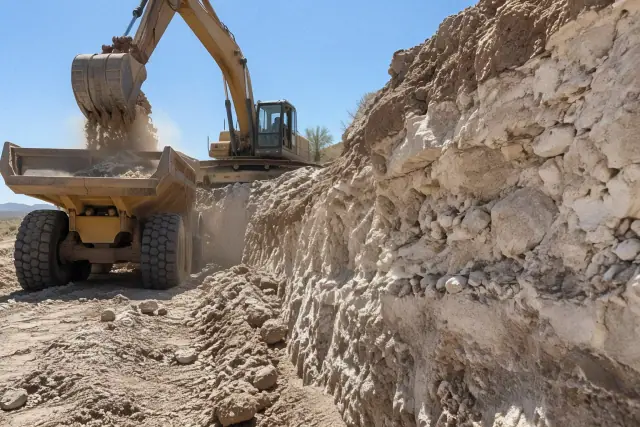
Caliche is a cemented calcium carbonate layer found across Maricopa County. Breaking through it can add hours to trenching or foundation excavation.
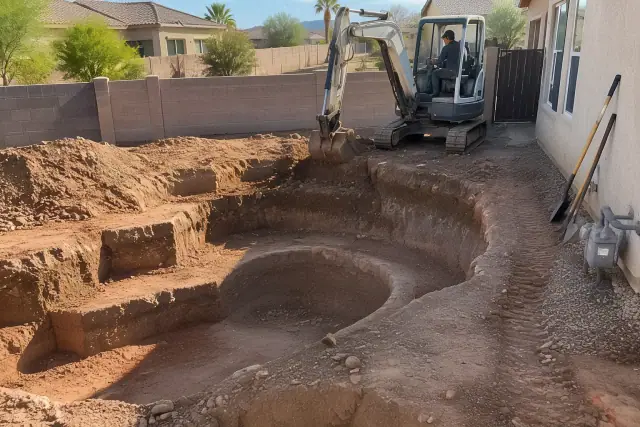
Restricted access on infill lots near Downtown Mesa or Dobson Ranch can limit machine choice. A yardage calculator cannot account for that constraint.
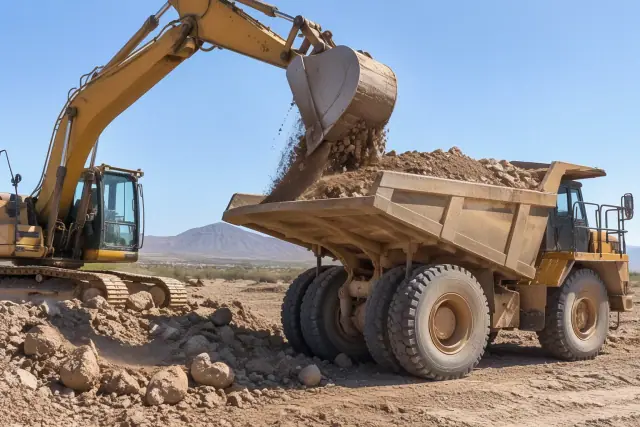
Spoil hauling adds transport and disposal costs beyond digging. Hauling distance and disposal site fees help explain differences between otherwise similar bids.
Smaller mini excavators often bill at $110 to $175 per hour. Machine selection is a major part of the total bid.
A 20-ton excavator typically bills at $200 to $300 or more per hour with an operator. Higher fuel use and transport costs contribute to the premium.
A 100-foot trench in workable soil generally costs $400 to $1,500 at typical utility depth. Rock, deeper cuts and hand-digging near existing lines can raise the total.
Standalone labor for site preparation, hand-digging or flagging typically adds $40 to $75 per hour per worker on top of equipment cost. Operator labor is usually bundled into the machine rate.
| Pricing basis | Typical range | Scope and cost drivers |
|---|---|---|
| Machine and operator nationally | $100 to $300 per hour | Broad hourly range; machine size and job complexity affect the rate. |
| Bundled hourly excavation | $110 to $325 per hour | Equipment, fuel and operator; check equipment transport and other separate charges. |
| Arizona hourly excavation | $130 to $300 per hour | Machine size and soil conditions influence where a project falls within the range. |
| Straightforward digging | $2.50 to $15.00 per cubic yard | Digging by material volume; rock and dense clay slow production. |
| Land excavation with removal and hauling | $108 to $247 per cubic yard | Broader scope that includes material removal and hauling, beyond straightforward digging. |
Hourly and cubic-yard rates use different units. Compare the same scope, including transport, disposal and minimum charges, before deciding which quote offers better value.
A backyard drainage trench and a commercial building pad need different pricing methods. Hourly time-and-materials billing follows the time needed; a cubic-yard bid follows the volume moved; a flat fee covers a defined scope. National marketplace data places the average residential excavation project near $2,020, but larger foundation and septic combination jobs can run $25,000 to $80,000 when grading, hauling and utility work are bundled together. Equipment delivery and collection, disposal and minimum charges help explain why multiplying a digging rate alone may understate the total.
In Mesa, caliche, dense clay and rock can increase digging time and cutting-edge wear compared with loose decomposed granite. Sandy ground near washes may excavate faster while still needing additional shoring. Scope matters too: grading depends on lot size, slope and compaction; utility trenching on depth and ground conditions; pool removal on pool material and backfill volume; and concrete removal on slab thickness, rebar and disposal. Ask about City of Mesa Building Safety Division permit costs, utility-location planning through Arizona 811 and any summer fuel surcharge. Engineered commercial scopes tend to be more predictable than residential jobs with subsurface unknowns.
How do you calculate excavation cost? Start with cubic yards multiplied by the appropriate per-yard rate, or estimated hours multiplied by the hourly rate, then add equipment transport, permits and spoil hauling. Larger commercial jobs may also need soil testing or a site survey. Is operator labor extra? It is usually included in the machine rate, while separate site labor can be an additional charge. How much should a contractor charge? The bid needs to cover equipment, fuel, labor, mobilization, demobilization, disposal and profit; tracking actual job costs for several months helps establish a workable rate.
Share the planned digging scope, access limitations and whether excavated material needs to leave the site. A site visit helps account for soil conditions and equipment needs before you approve the work. Request a free excavation estimate to compare the complete scope.