Digging Is an Early Phase
The excavation crew creates the pool cavity and grades it to the planned profile. Finishing the hole clears the way for later construction; it does not mean the pool is ready to fill.
At Mesa Excavation Co., most residential pool excavations take 1 to 5 days, depending on soil, pool size, and equipment access. Knowing where the digging phase fits helps you plan the rest of your pool build: utility locates and site preparation come first, while plumbing, shell construction, and finishing follow.
The excavation crew creates the pool cavity and grades it to the planned profile. Finishing the hole clears the way for later construction; it does not mean the pool is ready to fill.
Caliche is cemented calcium carbonate that a standard bucket may struggle to break. A hoe ram or heavier attachment can turn a one-day dig into a three- or four-day job.
Review the route for the excavator and dump trucks before choosing equipment. Tight lot lines can require hand work along the edges, adding time even when the pool itself is modest.
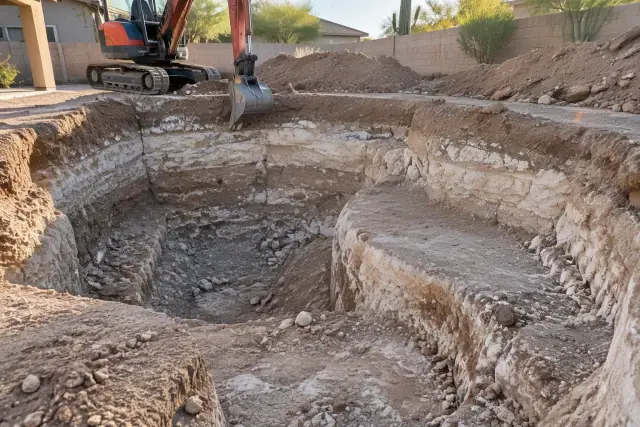
Caliche often appears 18-36 inches below grade on East Valley lots. Exposing this hard layer explains why the crew may need a breaking attachment.
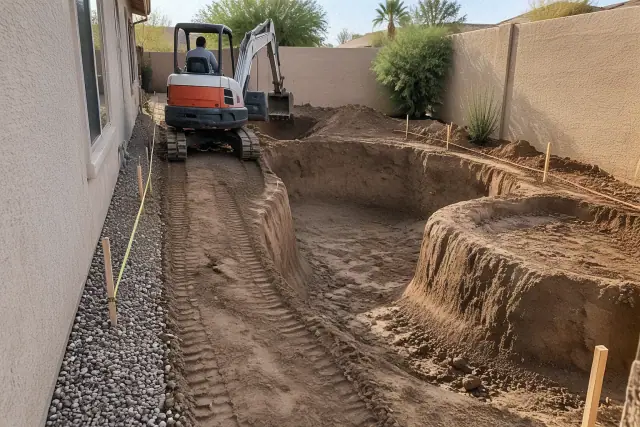
The equipment route affects machine selection and how soil reaches the hauling truck. Limited access can slow an otherwise straightforward backyard dig.
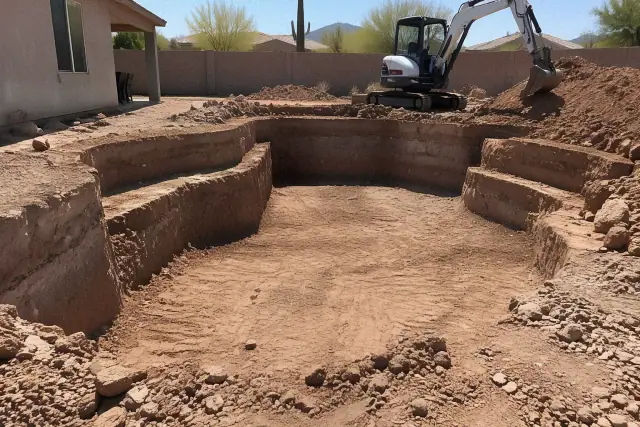
Shallow and deep cuts must follow the pool plans. Benching and careful edge trimming help the crew shape the cavity and manage unstable soil.
Arrange utility locates through Arizona 811 and confirm the pool layout before excavation starts. Resolve permitting and any applicable dust-control requirements before equipment arrives.
A two- or three-person crew with a mini excavator and skid steer handles many backyard digs. Larger custom shapes or combined retention basin work may need a larger machine and hauling truck.
A typical 14-by-28-foot pool at an average depth of 5 feet produces around 70-75 cubic yards of soil. Larger pools with deep ends near 8-9 feet can generate 100 cubic yards or more.
Plumbing rough-in, steel or shell placement, gunite or fiberglass installation, decking, and plaster curing still affect the completion date. Keep those phases separate when discussing the excavation schedule.
These excavation ranges start once equipment is on site and utility locates are cleared. Site preparation and later pool construction have their own schedules.
| Pool or site condition | Typical excavation time | What affects the schedule |
|---|---|---|
| Small plunge pool or spa, around 8 by 14 feet | Often 1 day | A mini excavator working through a clear access point. |
| Standard rectangular pool, 14 by 28 or 16 by 32 feet | Typically 2-3 days | Includes fine grading and benching in workable conditions. |
| Custom layout around 15 by 30 feet or larger | Usually 4-5 days | Free-form curves, tanning ledges, attached spas, or caliche can add work. |
| Complex shape or caliche-heavy lot | Can extend to 5-7 days | Hard ground and more involved cuts may push digging toward a week. |
Confirm the expected duration against your pool plans, soil conditions, and equipment access.
Pool excavation creates the shell cavity, including shallow and deep areas, benches, and any spa or tanning ledge cuts. The process starts with utility locates, site grading, and layout staking to the pool builder's plans; nearby buried lines may call for hydro excavation. Old patios, tree roots, or structures may need removal first, and land clearing or site grading can add a separate 1-3 day preparation phase. After digging and fine grading, usable spoil may stay on the property as fill or topsoil, while remaining dirt and rock need hauling.
Mesa's Salt River Valley soil varies from cemented caliche to sandy ground near washes and pockets of clay. Sand can dig quickly but may need shoring or wider benching; clay holds moisture and can delay work after rain. A standard gunite profile from 3 to 8 feet generally takes less digging than a diving-pool cut reaching 9 or 10 feet, while curves and attached spas add trimming. Monsoon rain, typically July through September, can interrupt the schedule. Across Dobson Ranch, Las Sendas, and Eastmark, the individual lot's soil and access matter more than a generic completion date.
Can a pool be built in a week? The excavation may fit within a week, but plumbing, shell work, inspections, and finishing take longer. Does digging it yourself save money? Mini excavator rental runs $300-$500 per day before fuel, attachments, and hauling; an unfamiliar operator may also take longer and face utility-strike or unstable-sidewall risks. What does professional excavation cost? National figures range from $500 to $3,020, averaging around $2,500, with soil, access, and size affecting the price in Mesa. How is the soil volume calculated? Multiply length by width by average depth in feet, then divide by 27 for cubic yards: a 14-by-28-foot pool averaging 5 feet deep removes roughly 72 cubic yards.
Share your pool builder's plans, proposed depth, equipment access, and any known soil or utility concerns. These details help us assess the digging scope, hauling needs, and likely schedule for your Mesa property.